Connect each roof finding to its slope, junction and water route. A sketch with consistent references makes an overview, a close-up and an internal stain easier to compare and revisit.
Use this sequence for visual inspection of existing pitched roofs and rainwater systems, within safe access and your instruction. The roof guide and rainwater guide explain the components; the checklist supports offline notes.
Plan what you can inspect safely
Agree the question, access and intended output. Start with available records and safe observation positions; record the slopes and details you cannot see. HSE requires roof work to be planned and carried out by competent people, with precautions appropriate to access, edges and fragile surfaces. Treat roofs as fragile until a competent person confirms otherwise. HSE, Roof work: safe access and fragile surfaces.
This method does not authorise walking a roof, lifting coverings or entering an unsafe roof space. Arrange suitable specialist access where the unresolved question warrants it. If falling material or another immediate danger is suspected, keep clear and seek urgent competent assistance.
Make the inspection repeatable
Use the same IDs on your sketch, photographs and record. Suggested labels are S01 for a slope, J01 for a junction, G01 for a gutter run, O01 for an outlet, P01 for a downpipe and D01 for its receiving point. These are an original recording convention; adapt them consistently to the job.
- Locate the roof
Sketch orientation, slopes, adjoining roofs and observation positions. Record date, weather and which areas were obscured.
- Read each slope and junction
Describe covering identification and confidence, visible damage and earlier repairs. Work systematically through ridge, hips, valleys, eaves, verges and abutments that are present.
- Follow each water route
Connect gutter, outlet, pipe and receiving point. Mark where the route is concealed. Record observed flow separately from stains or reported overflow.
- Match accessible interior evidence
Locate relevant marks or exposed fabric on the same sketch. Preserve the difference between an internal symptom and an established entry point.
The two-page checklist follows this sequence, with space for an inspection sketch and two linked observation records. Use additional copies or job records for further findings.
Photograph context, route and detail
Capture an overview that locates the slope, a view showing the relevant junction or water route, and a detail of the finding where safely obtainable. Link all three to the same record. Keep originals and note any obstruction, digital zoom or other limitation that affects interpretation.
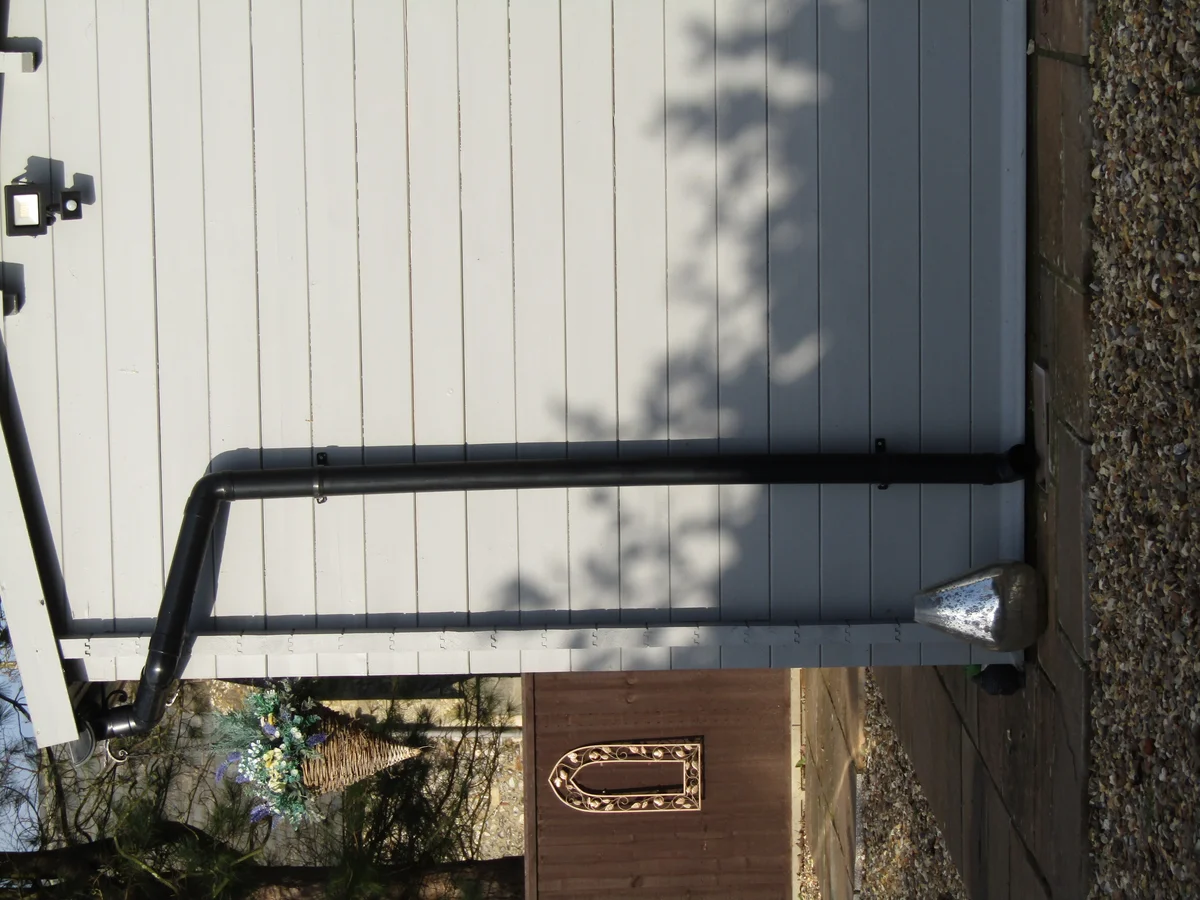
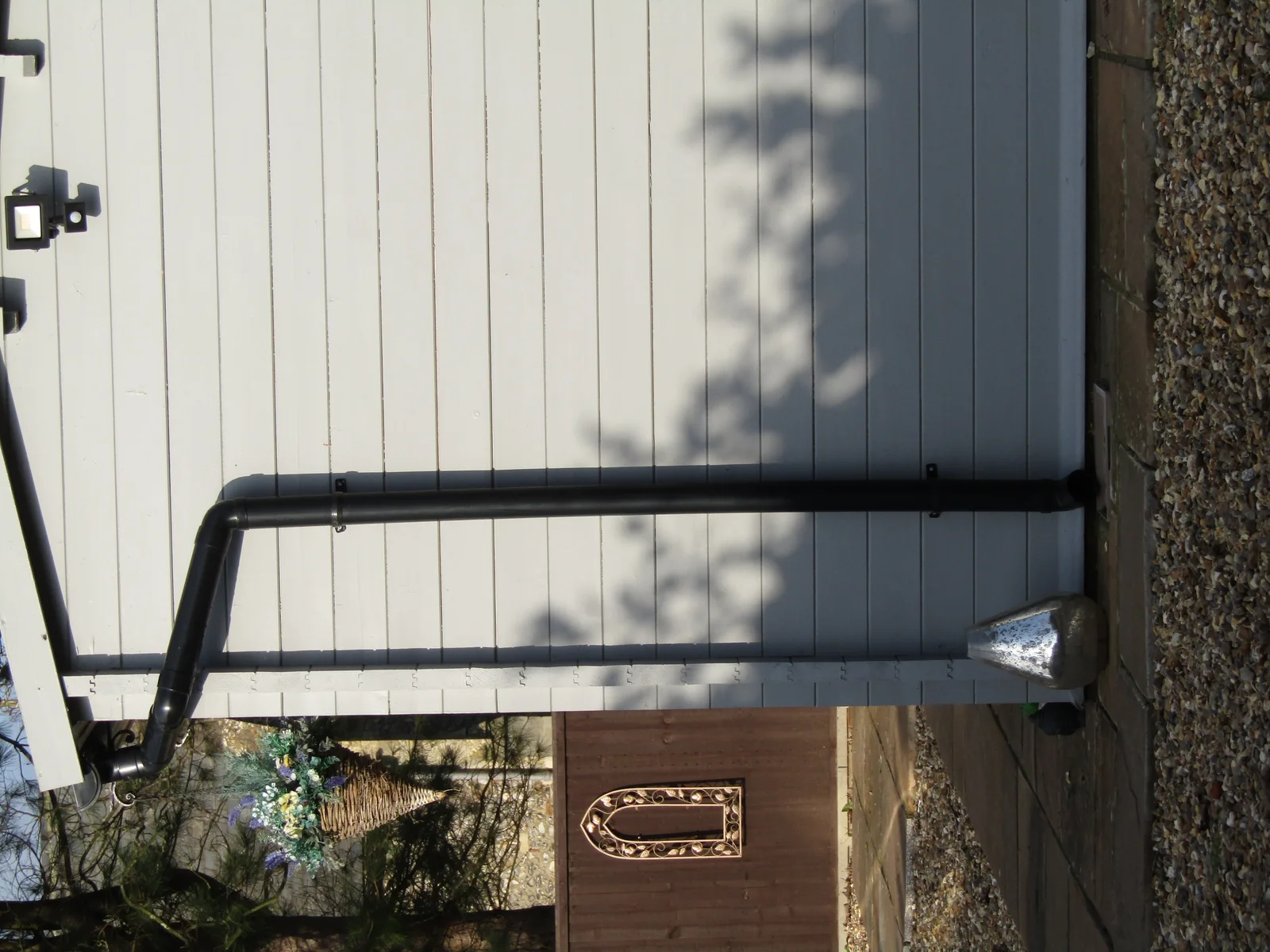
Rainwater arrangement on a shed in Trimingham, Norfolk: gutter connection, offset bends, wall brackets and a downpipe. Trace the visible connection, then identify what remains outside this view.
Kolforn · CC BY-SA 4.0
Image details and original
Source photograph · View larger image. Resized and converted to WebP; same licence. Does not establish gutter fall, hydraulic capacity, pipe diameter, blockage, leak performance, concealed discharge route, or compliance. No claim is made that this arrangement is an ideal or approved installation. The photograph gives a village and coordinates, not a street address.

Use the British material and profile guide to refine covering identification. For a reported leak, record whose account it is, the conditions in which it occurs and any available dated evidence. A dry-weather visit cannot demonstrate how the system behaves during an unobserved rainfall event. Avoid inferring hidden fixing or batten condition from a distant surface view.
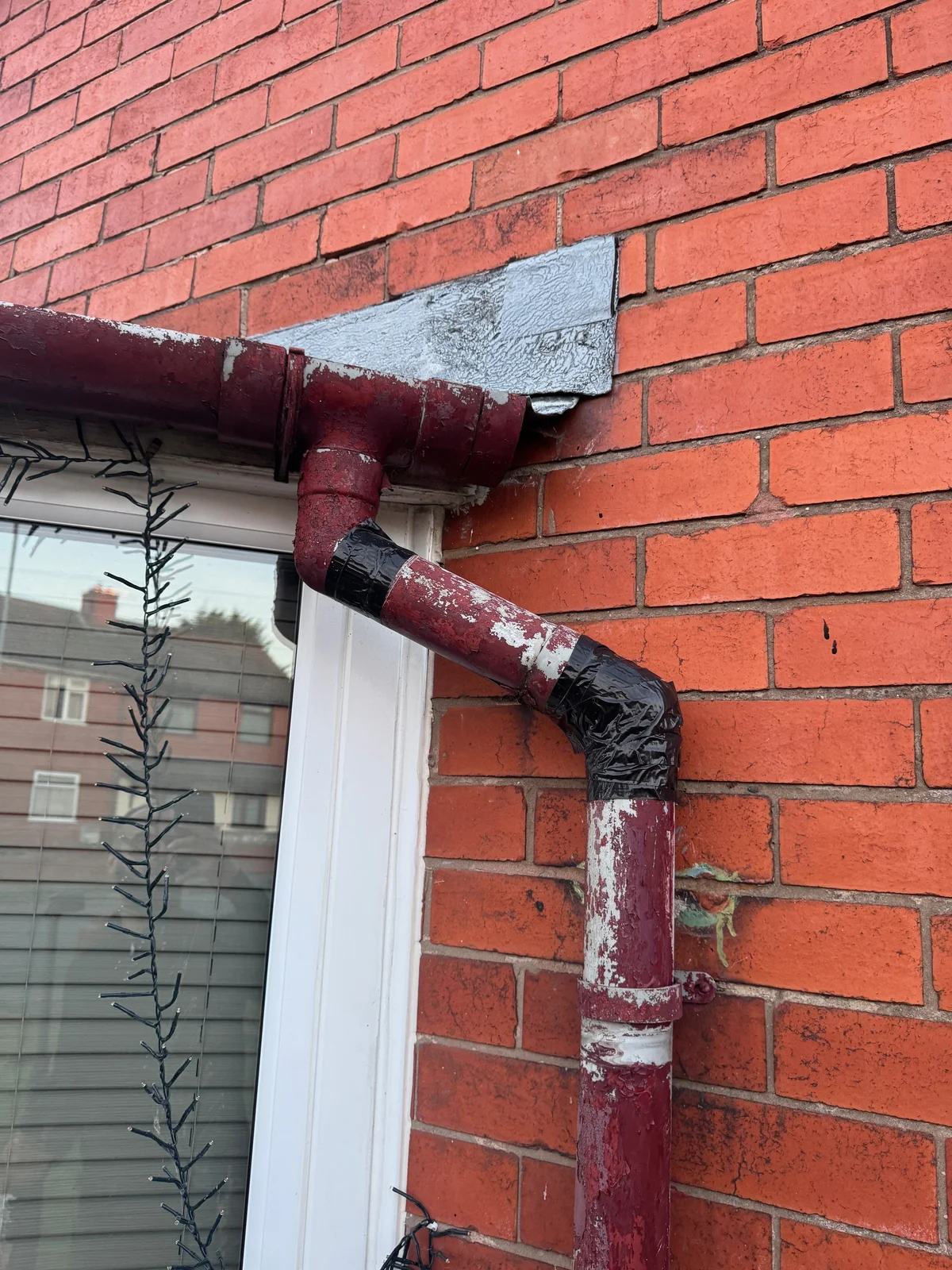
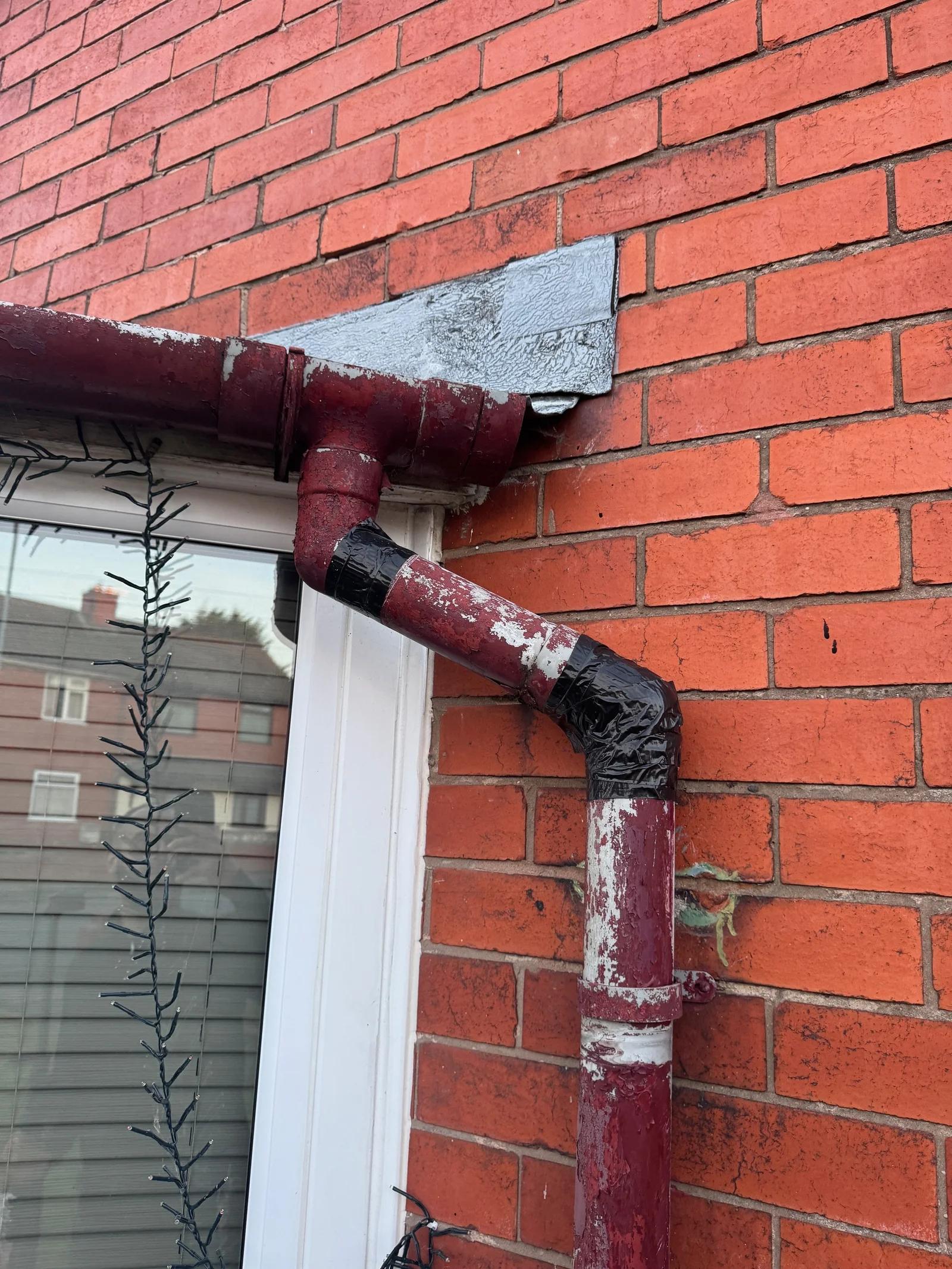
Tape wraps this downpipe connection. Record the visible repair and any observed performance separately; the tape does not establish whether the joint currently leaks.
Survey archive photograph · View larger image
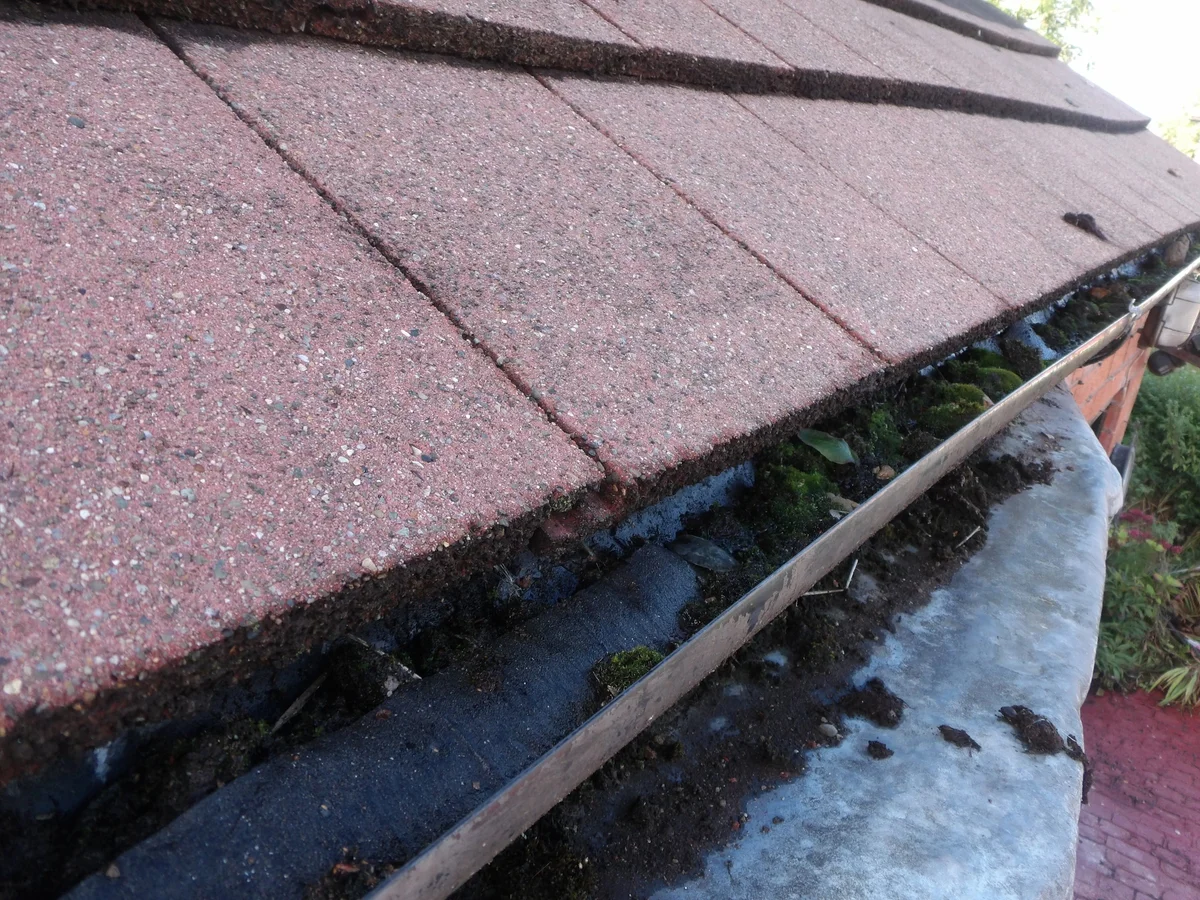
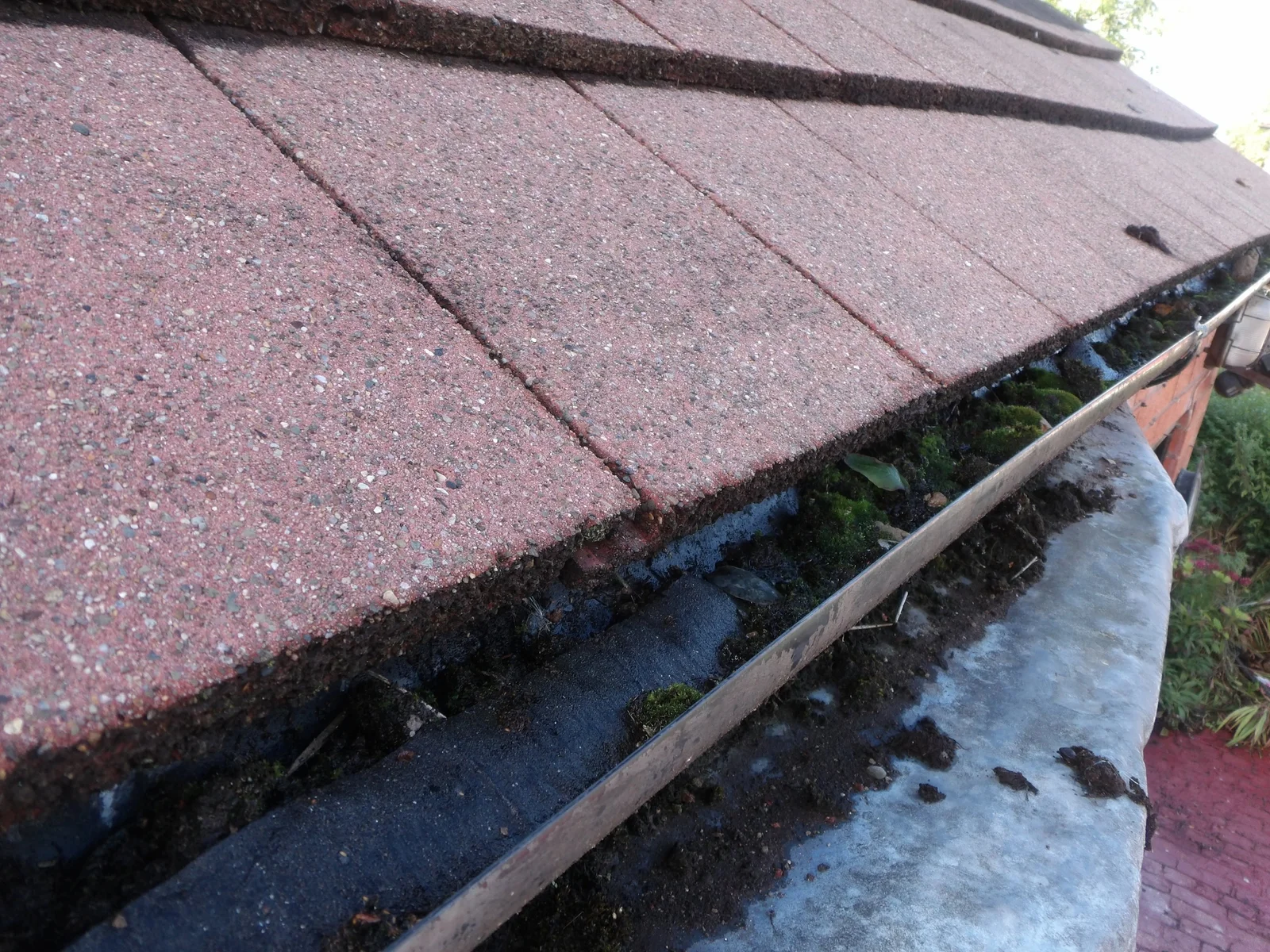
A detail records debris in a gutter. Pair your own detail with a view locating the run and outlet; this image alone does not establish gutter fall or hydraulic capacity.
Survey archive photograph · View larger image
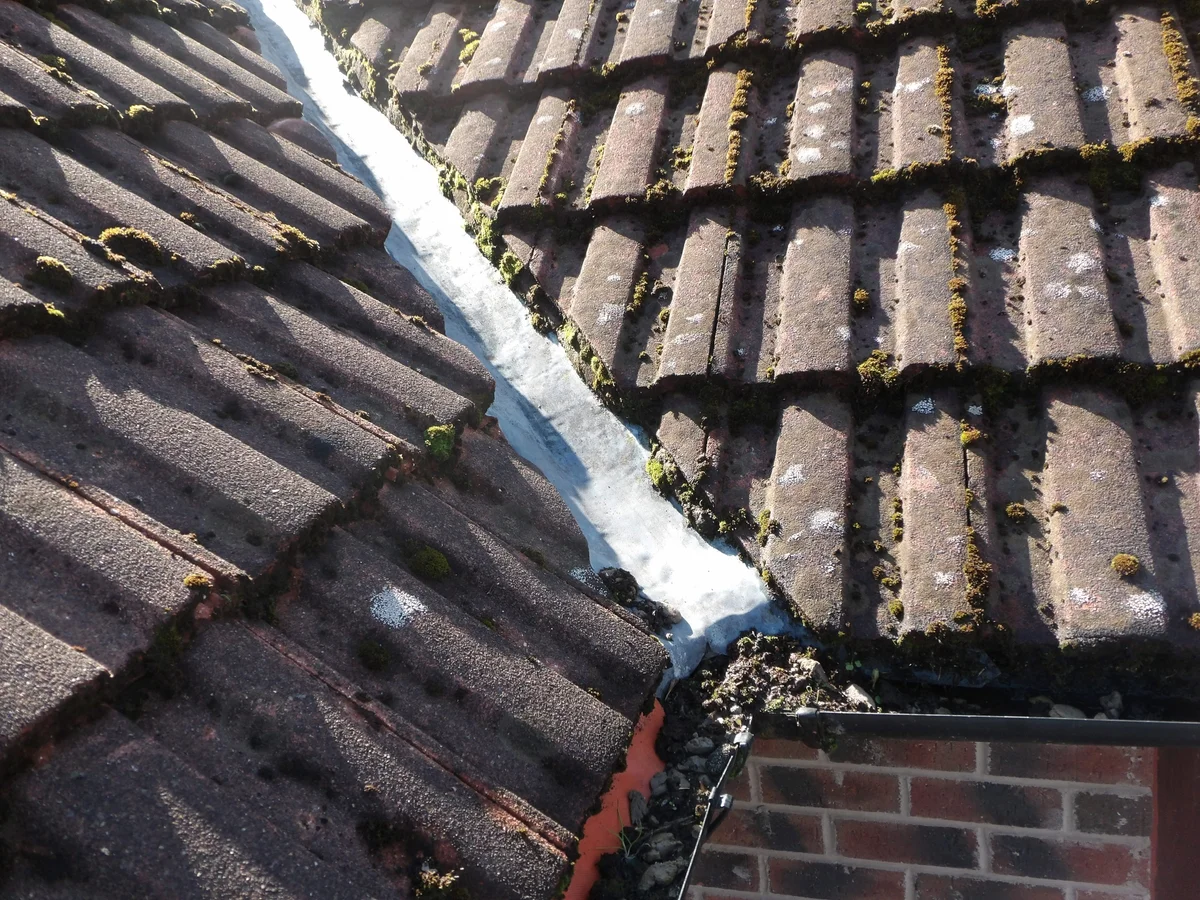
This view connects the valley channel with its lower receiving gutter and locates the accumulated debris. It adds route context to a close-up; it does not record water flowing through the junction.
Survey archive photograph · View larger image
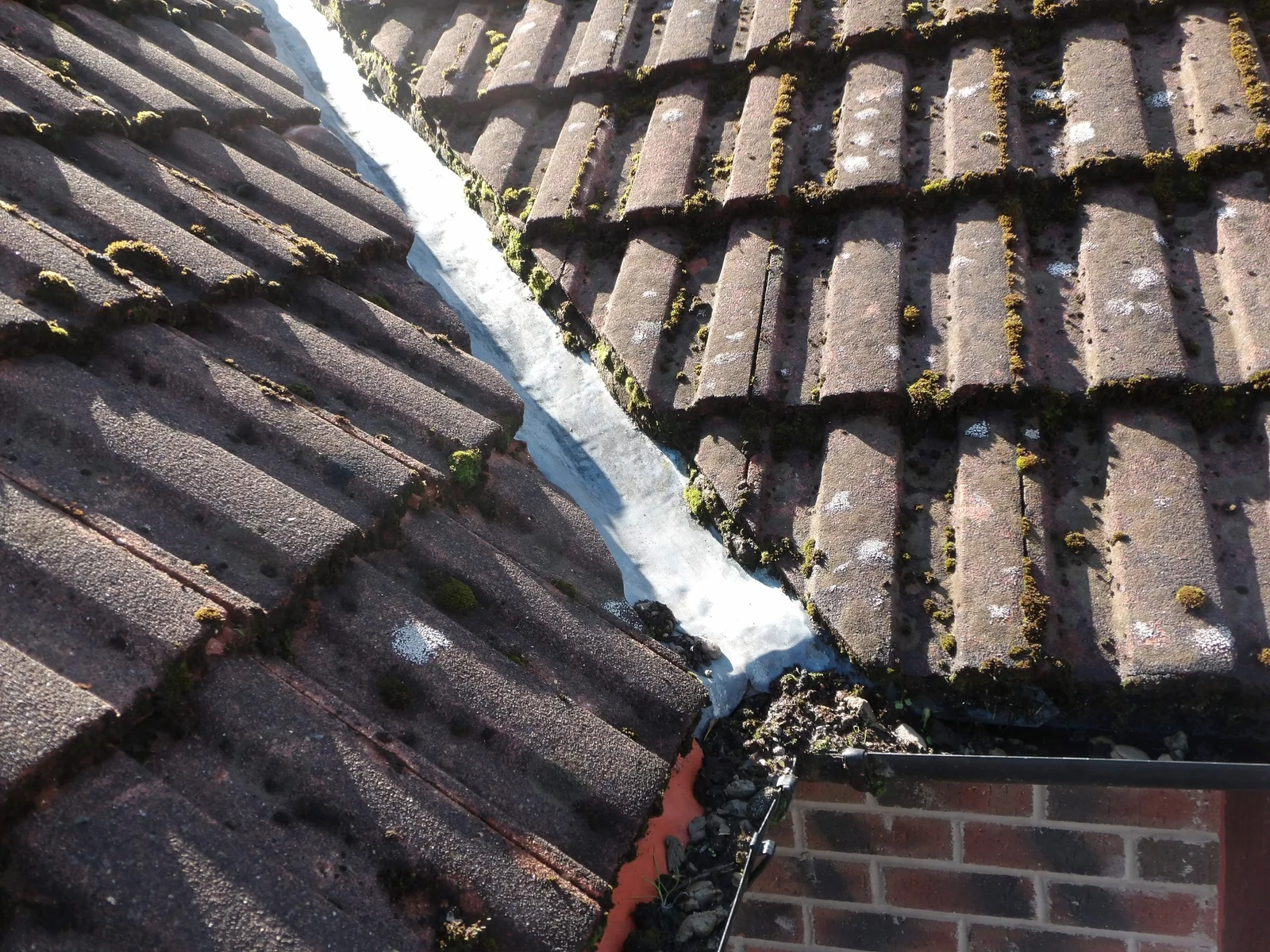
What is supported, and what is still missing?
Supported: a visible valley-to-gutter route and debris around the junction.
Still missing: the full upstream catchment, the downstream outlet, behaviour during rainfall and any connected interior finding. On your own job, add located views of the relevant route and distinguish witnessed performance from reported events.
Next question: does the route remain clear and carry water to its intended receiving point? Select safe observation or competent closer inspection to answer that question, within the agreed scope.
Use a finding to choose the next enquiry
| Enquiry | Evidence to request or collect | Decision it helps |
|---|---|---|
| Covering identity uncertain | Records or suitable close inspection of distinguishing details | Which material and product guidance applies |
| Isolated displacement or damaged junction | Located images and competent local inspection | Extent, cause and appropriate repair scope |
| Suspected overflow | Safe event observation, route tracing and maintenance history | Whether blockage, defects or capacity need investigation |
| Roof line distorted | Located geometry, construction and relevant interior evidence | Whether structural appraisal is required |
| Internal mark with uncertain source | Dated history and aligned roof/interior observations | A focused moisture investigation rather than a guessed repair |
This is an original workflow. Repair selection and intrusive work remain separate instructed activities. Keep physical findings distinct from insurance causation, policy cover or responsibility for shared components.
Try a small evidence exercise
Hypothetical visit: from ground level on a dry day, you see two chipped tile tails and slight course irregularity near the eaves. No tiles are visibly missing from the inspected area. A dark mark is present beneath one gutter joint. The occupier reports dripping there during rain. Battens, most underlay and the hidden side of the gutter are not visible.
Which statements could you support, and what follow-up would change the advice?
Reveal a proportionate record
Record: locate the chipped tails, course irregularity and mark, together with viewpoint, extent and access limits. Attribute the reported dripping to the occupier. State that the relevant concealed fabric was not inspected.
Keep open: neither the chips nor course alignment establish rotten battens, roof leakage or the need to replace the whole covering. The dry mark does not itself demonstrate a leaking joint.
Next enquiry: arrange suitable observation or competent inspection of the joint and local covering detail where justified. Investigate an interior symptom if one is reported or found. Record what would distinguish the competing explanations and who will act.
The exercise is invented; it does not re-assess a property from the archive. SPAB's advice supports relating junctions, coverings and internal evidence, while recognising that an internal mark may be remote from an entry point. SPAB, Roof maintenance.
Close the record with an action
For each finding, record the supported conclusion, unresolved question, consequence, next action, responsible person and timing appropriate to the circumstances. Then record what the follow-up found. A cleared gutter, an observed flow test and a resolved damp problem are different outcomes.
Trial the checklist on a suitable instructed job. Note omitted information, duplicated work and whether the record changed the next decision. Use those findings to revise this method and the linked technical guide.