A good inspection record helps someone understand what was found, why it matters and what should happen next. Keep the observation, explanation and action connected without turning an assumption into a fact.
Use the five records below as a common method across surveying tasks. Adapt the depth to the instruction, building and consequence of the finding; the subject guides add the relevant construction and measurement detail.
The five records that make a finding useful
Keep a location record, an evidence record, a reasoning record, an action record and an outcome record. A photograph or reading becomes useful when another person can understand where it came from, what it supports and what happened next.
1 Frame the question
Write the decision the client needs to make: for example, “What investigation is justified before repairing this damaged wall finish?” Record job ID, date, surveyor, service, permitted access and reporting deadline. Describe construction as observed, documented, inferred or unknown. Separate building age from assumptions about its construction.
Before selecting a test, write: “If the result is X, I would do Y; if it is different, I would do Z.” If neither result changes anything, reconsider the test. This is a proposed efficiency check, not a rule against collecting a useful baseline.
2 Preserve the facts
Give each location a stable ID, such as GF-K-W1-01: ground floor, kitchen, wall 1, point 01. Add an orientation plan so another surveyor can find it. Take an overview before close-ups. Record extent, finish, dimensions, condition and photograph IDs. Keep the original photographs and readings with the job.
Use four labels in notes:
| Label | Example |
|---|---|
| Observed | Paint blistering over a measured area on wall W1 |
| Measured | Instrument, mode, displayed result, unit and location |
| Reported | Occupier says the patch enlarges after prolonged rain; not witnessed |
| Inferred | Rainwater entry is a candidate explanation; pathway unconfirmed |
An inaccessible area is not inspected, not “no defect”. A suspected construction layer is not an established fact. Record what the limitation prevents you from concluding.
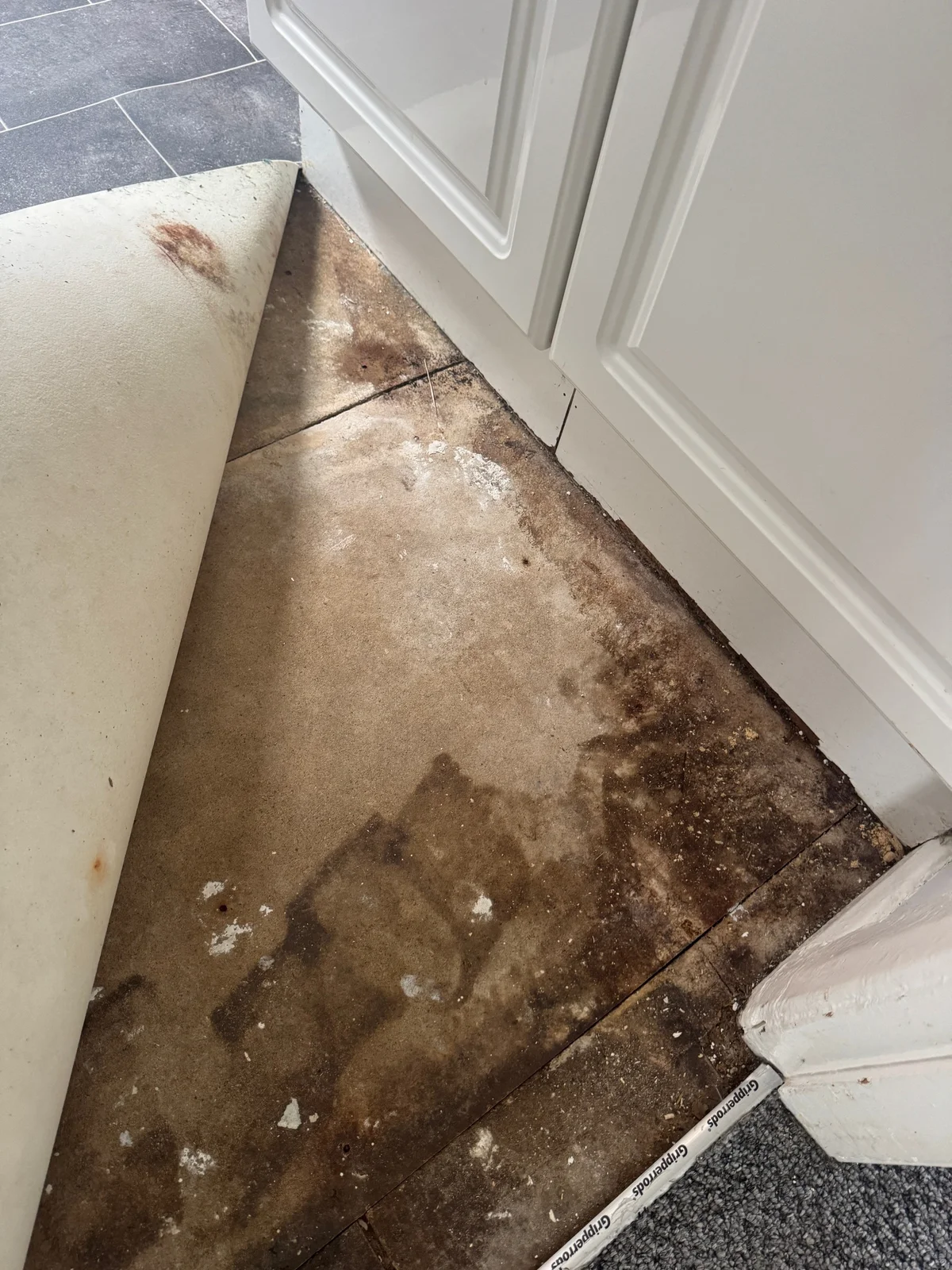
The exposed area records what could be seen where a floor covering was already turned back. Describe the staining and the inspection limit separately. Do not extend a finding to the floor hidden beneath the rest of the covering.
Survey archive photograph · View larger image
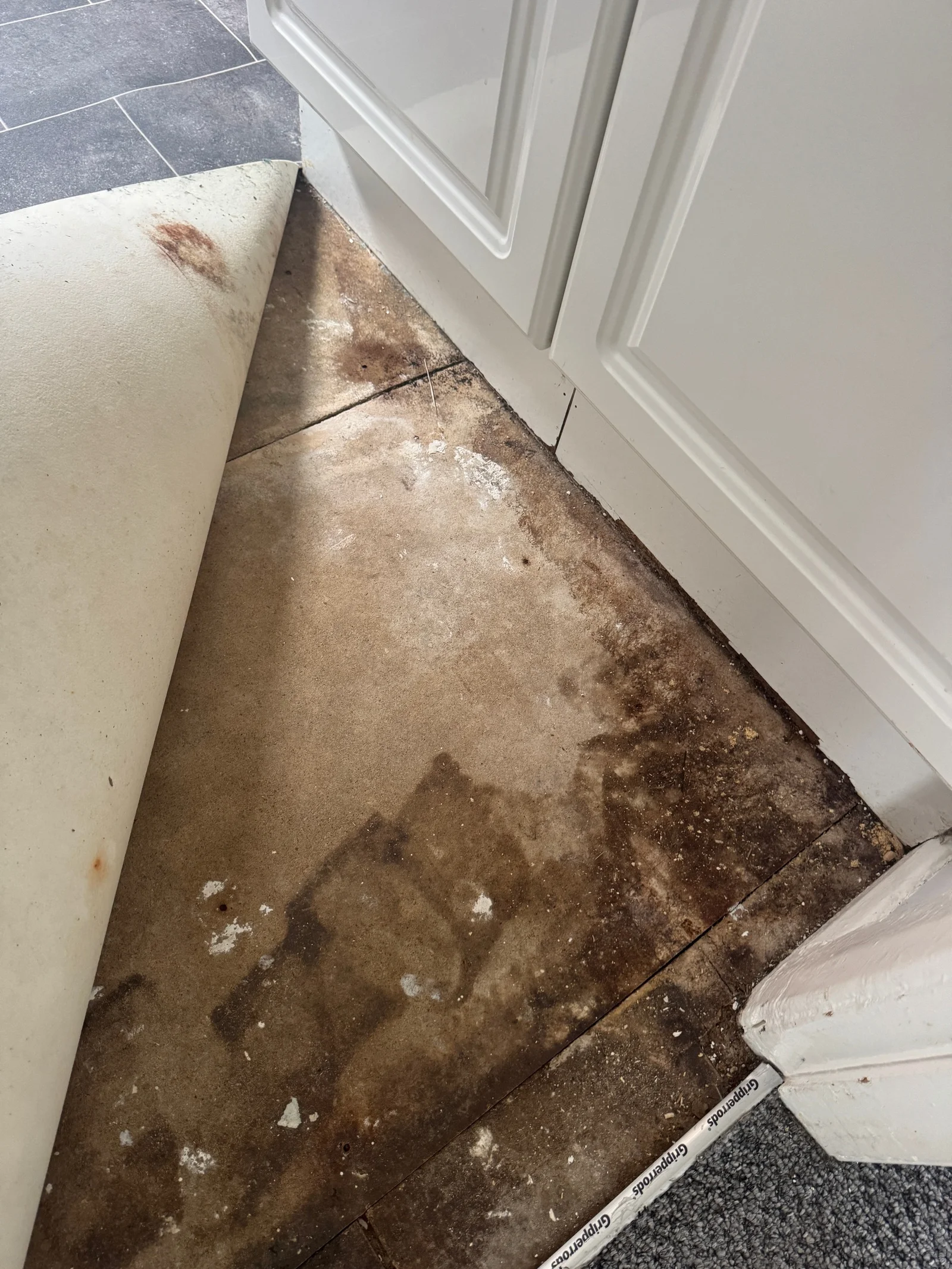
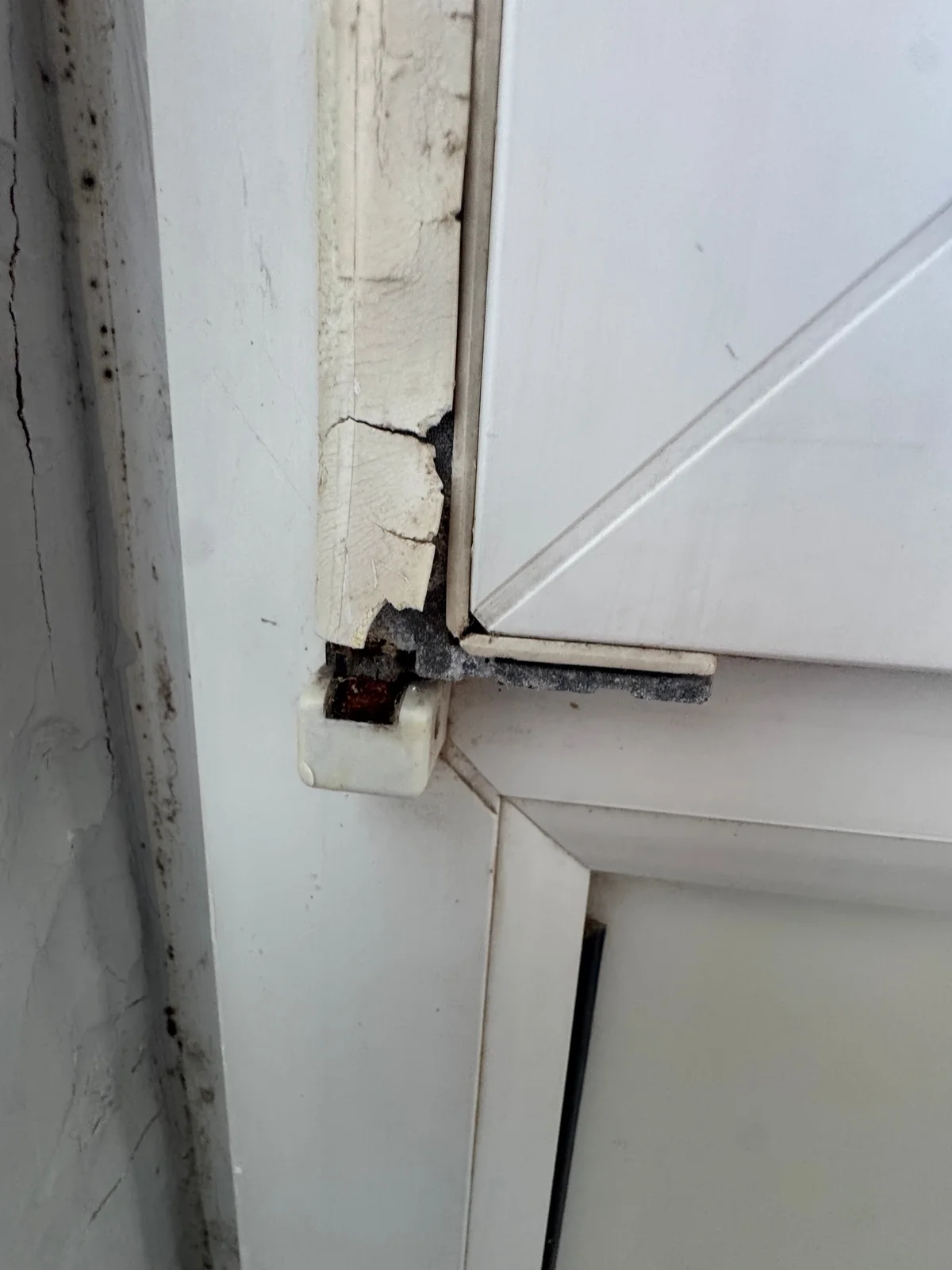
A cracked hinge cover is a visible observation. The material beneath it, the concealed fixings and the cause of damage are separate questions. A precise description avoids turning a damaged cover into an unsupported diagnosis of timber decay.
Survey archive photograph · View larger image
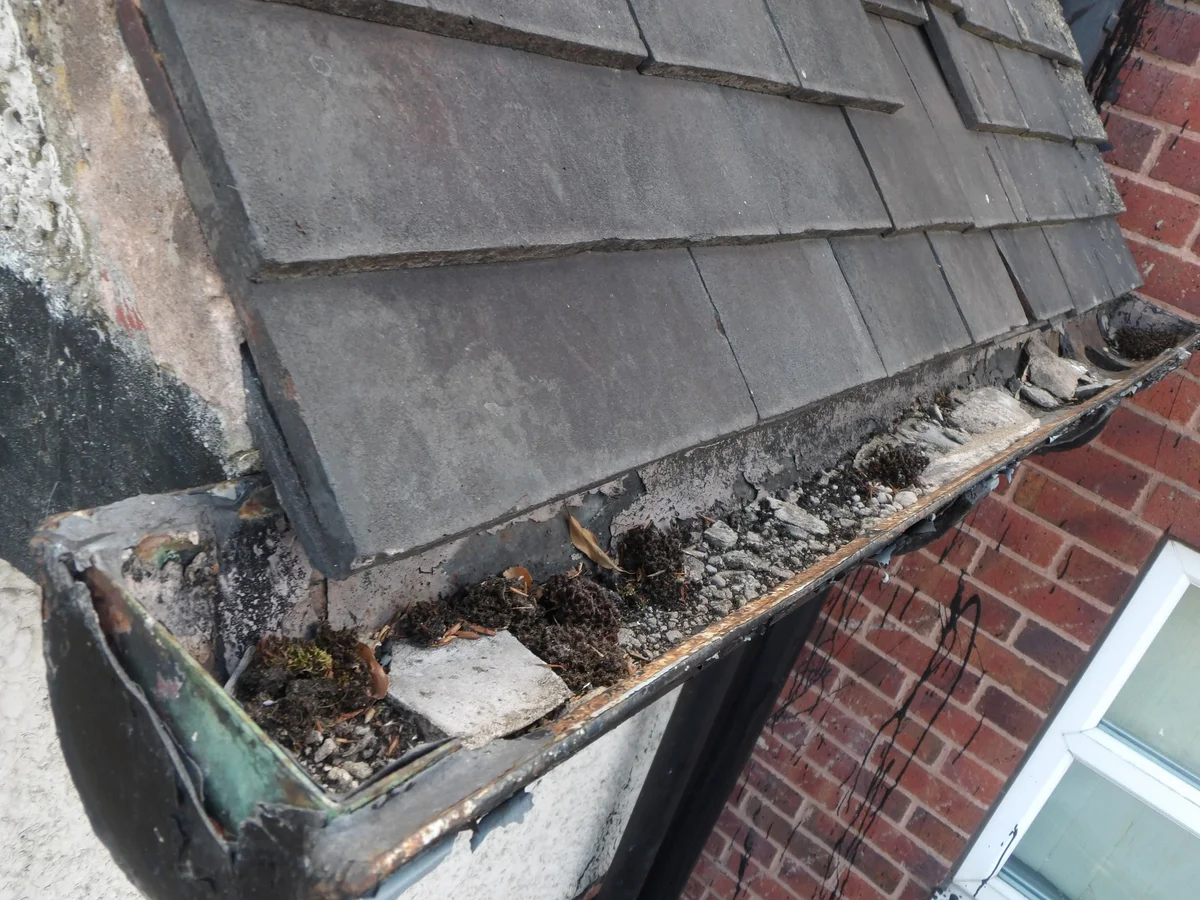
The wider view locates the gutter against the roof edge and shows the spread of material along the run. Keep this context with the paired detail photograph.
Survey archive photograph · View larger image
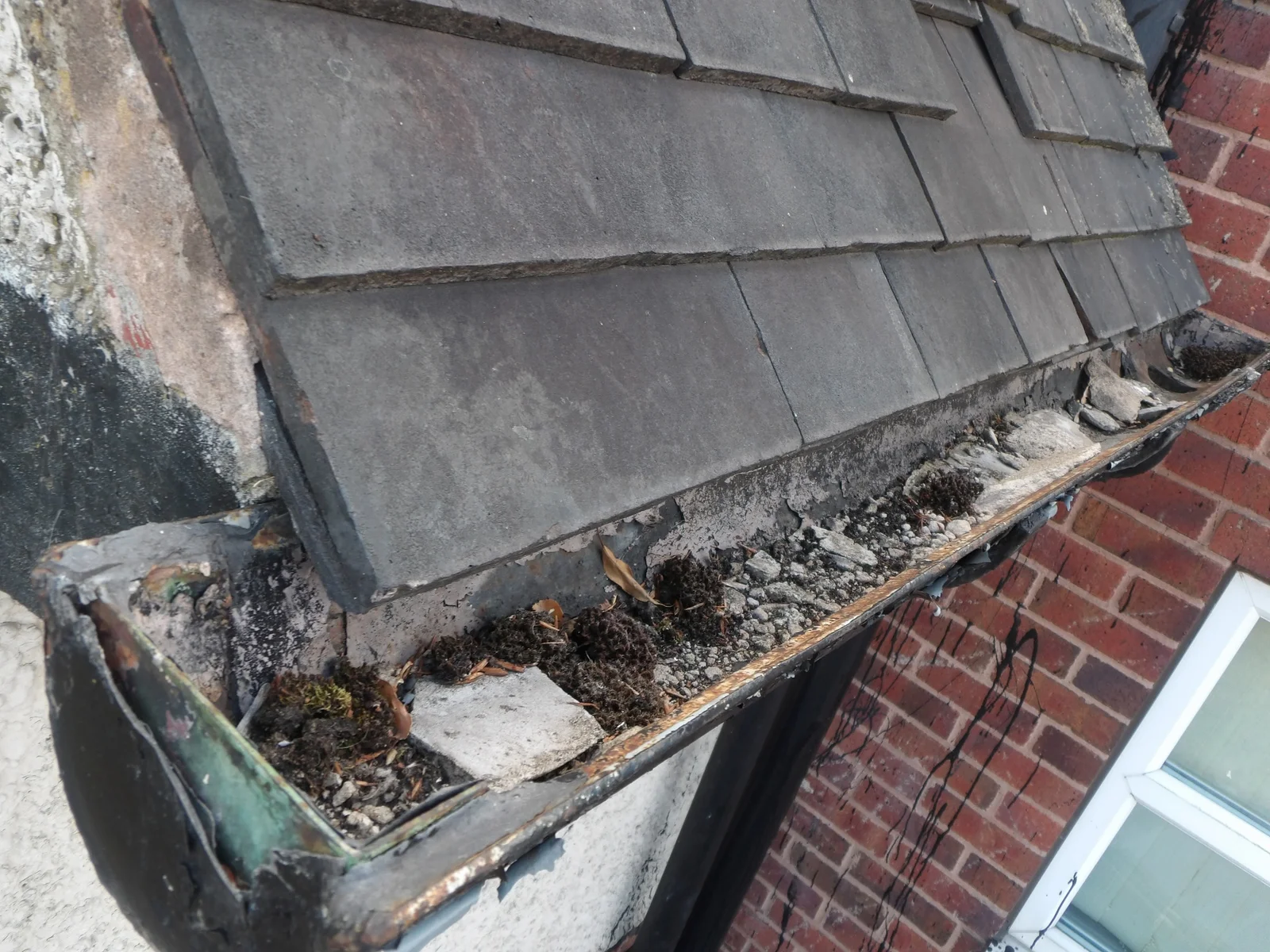
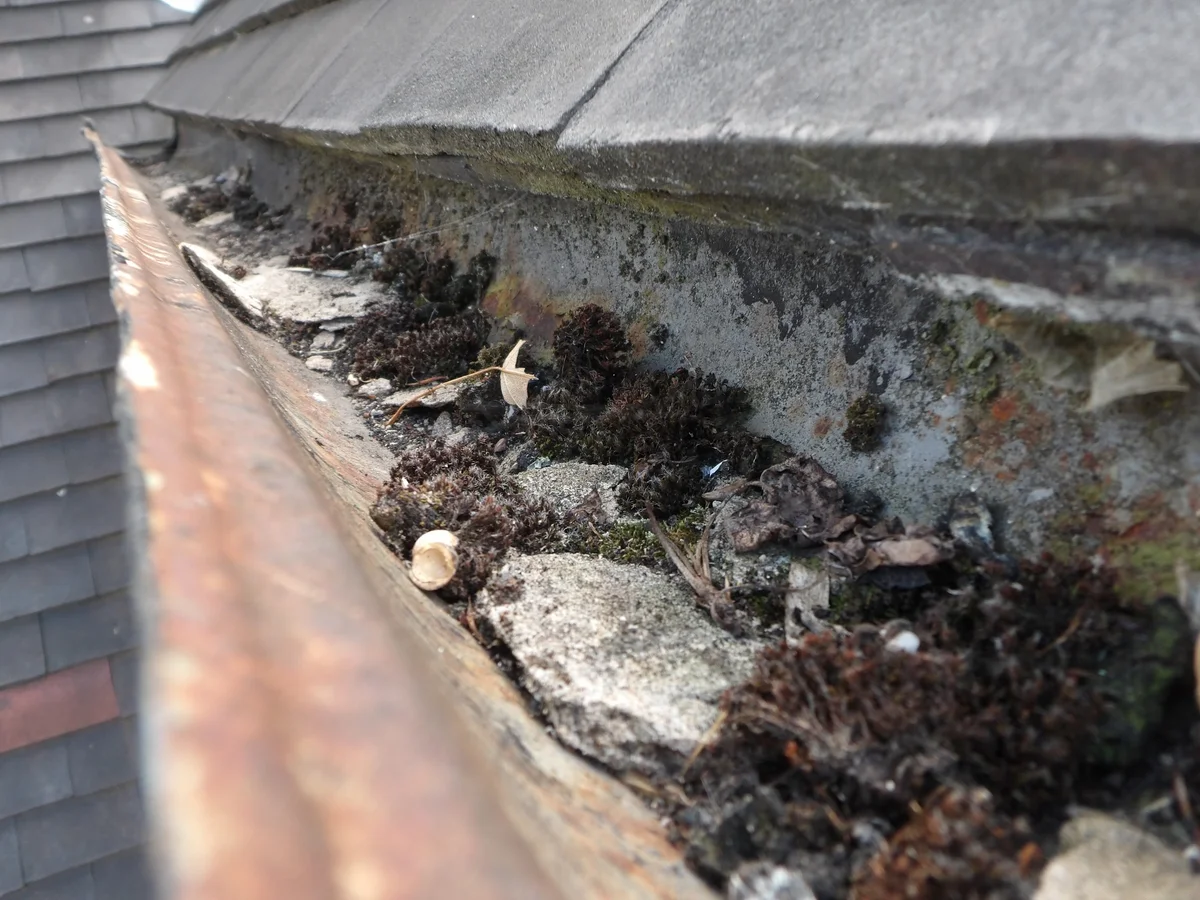
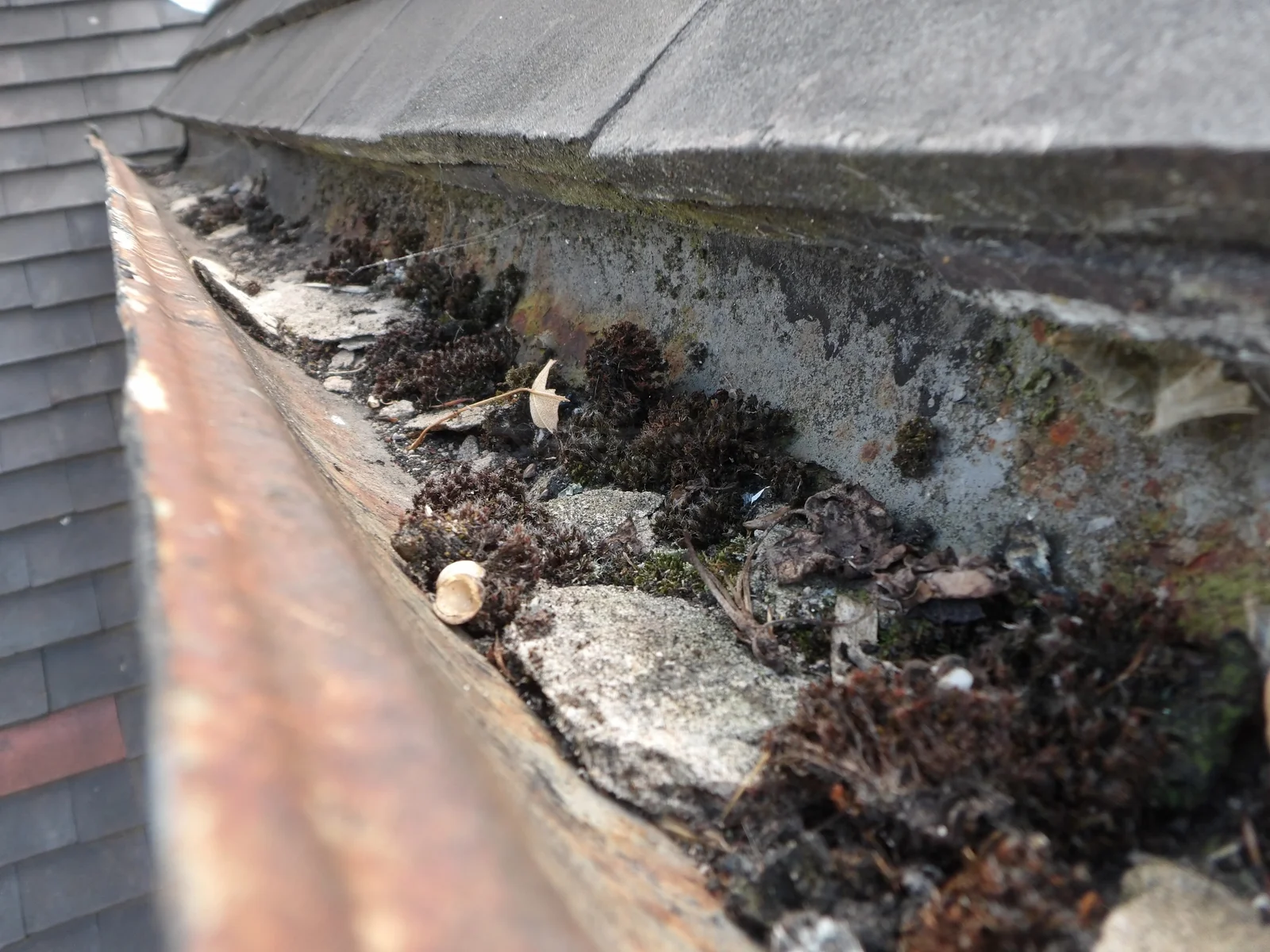
The closer view of the same gutter resolves fragments, moss and other debris. Their presence is visible; whether the outlet is obstructed and how water flows require further evidence.
Survey archive photograph · View larger image
Read the evidence
An overview and detail from the same gutter. First locate the affected run and the surrounding roof; then describe the fragments, moss and debris visible in the close-up. Flow, outlet condition and the origin of every fragment remain separate questions.
3 Compare explanations
For each material candidate, record supporting evidence, contrary evidence and the next useful discriminator. Do not give every imaginable cause equal attention: pursue plausible alternatives that would change the advice. Several mechanisms can coexist.
| Candidate | Supports | Weakens or conflicts | Evidence that would change the decision |
|---|---|---|---|
| Your leading explanation | Refer to evidence IDs | Include inconvenient observations | Specify a question, method and expected distinction |
| Material alternative | Refer to evidence IDs | Record gaps honestly | Explain why the extra work is proportionate |
“Possible” is a confidence statement, not an action plan. Replace a vague referral with a focused brief: question to resolve, information already collected, competence required, access constraints and result needed.
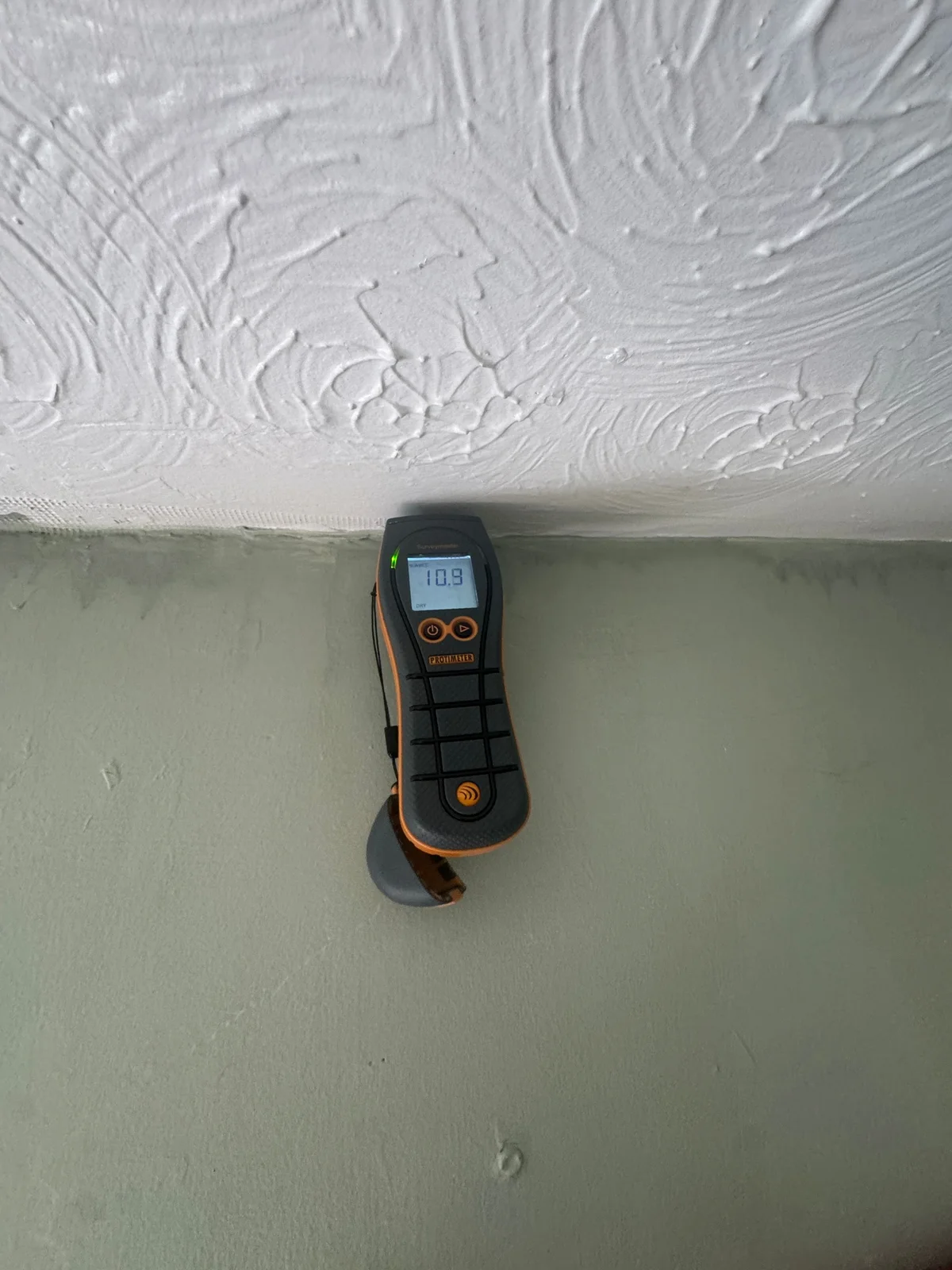
The meter displays a dry indication beside visible marks on the wall. Preserve both observations. The number on this display is not a demonstrated percentage water content for masonry.
Survey archive photograph · View larger image
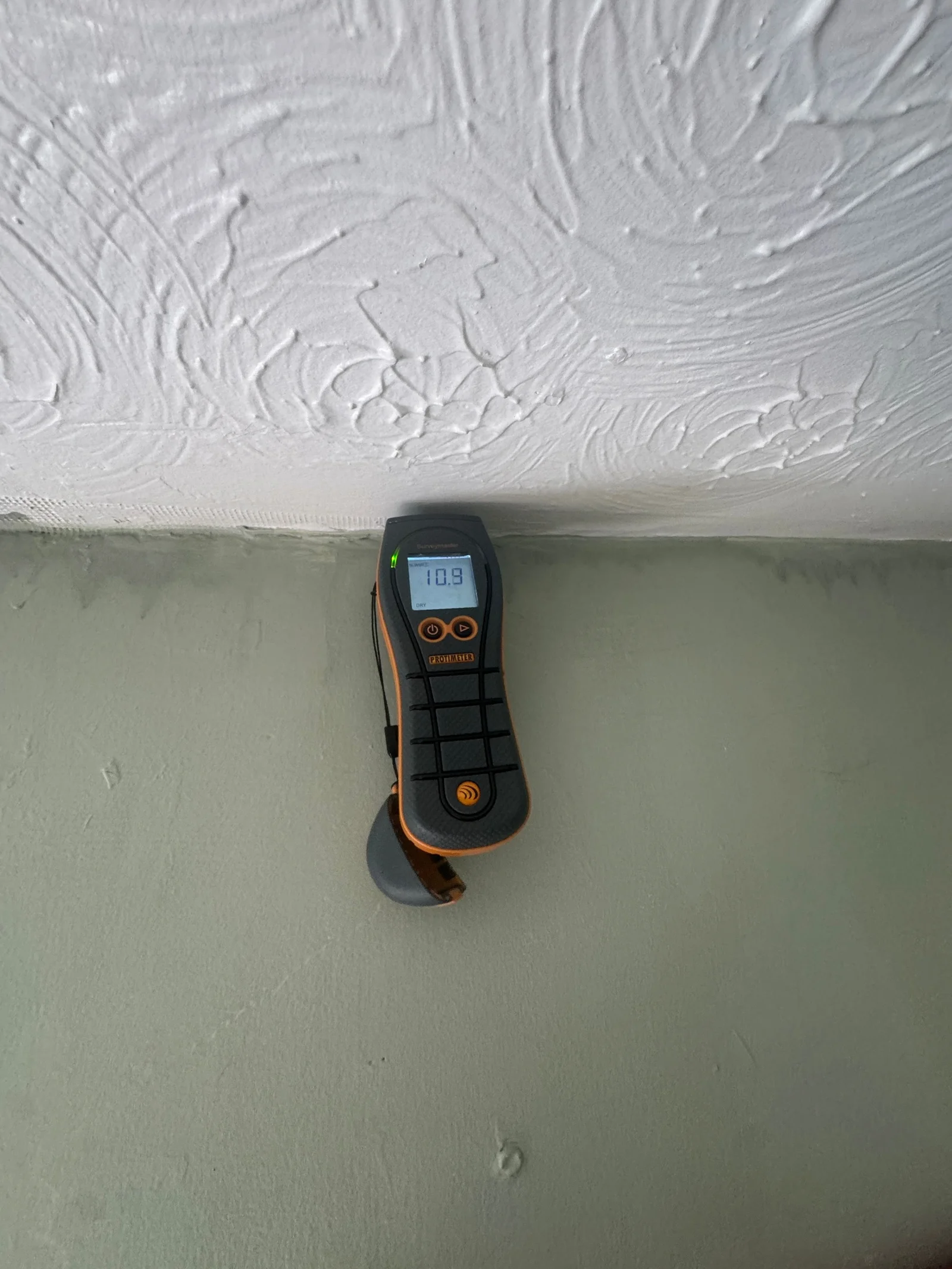
Read the evidence
The display indicates “dry” beside visible wall marks. That is contrary evidence to weigh, rather than a reason to omit the marks. A single indication does not establish the condition of the whole wall or turn this into a calibrated masonry water-content measurement.
4 Turn reasoning into advice
Draft in this order: location and condition → significance → explanation and confidence → action → limits and review. Tie urgency to the actual consequence and exposure. Keep immediate protective action separate from the longer investigation where circumstances require both.
Example scaffold: “At [location], [observations]. This affects [function/consequence]. [Explanation] is [confidence] because [evidence], although [alternative or limitation] remains. Arrange [specific action/person/timing] to resolve [question]. Review [defined evidence or outcome] before [dependent work].” This is original drafting guidance; adapt it to the instructed report rather than pasting it mechanically.
5 Check the result and retain the lesson
Set a named owner, review trigger and intended outcome before closing the visit. Review triggers can be an investigation result, a repair completion, a relevant weather event or an agreed monitoring period. Do not set a universal drying deadline.
At follow-up, record what actually happened, whether it supported the explanation, remaining uncertainty and any revised action. Keep the evidence with the job record and reflect on what the outcome changes in your future inspections.
A short note with a clear purpose
Illustrative note: “At G01 above the rear door, staining was visible beneath the gutter joint during a dry visit. The occupier reports overflow in heavy rain. Leakage was not witnessed. Arrange a safe check of that joint and the connected outlet, then review whether the findings explain the wall staining.”
The note gives a location, an observation, an attributed account and an answerable next task. It avoids treating the reported event as something the surveyor saw. Add the actual date, photographs, responsible person and agreed timing to a real record.
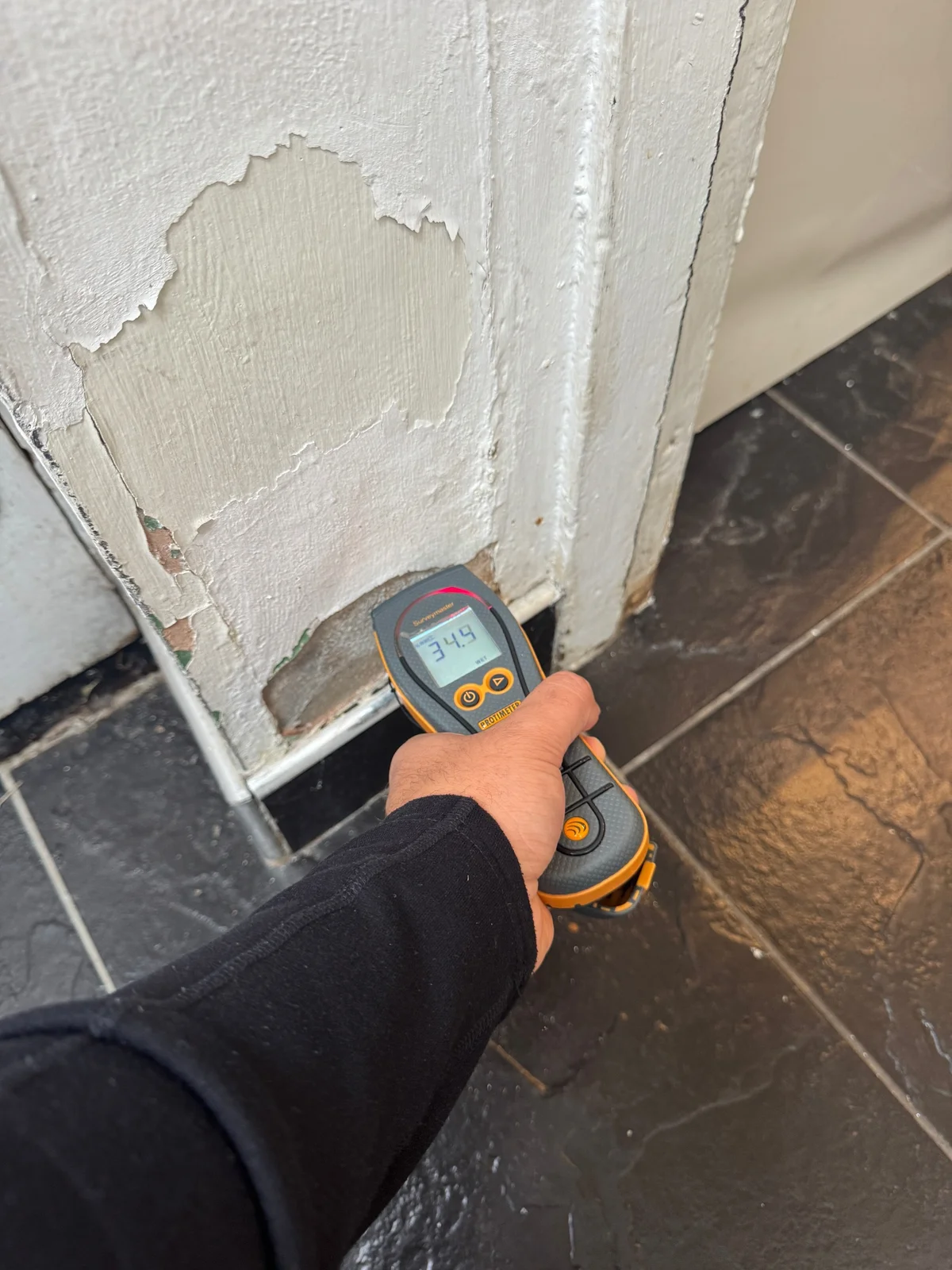
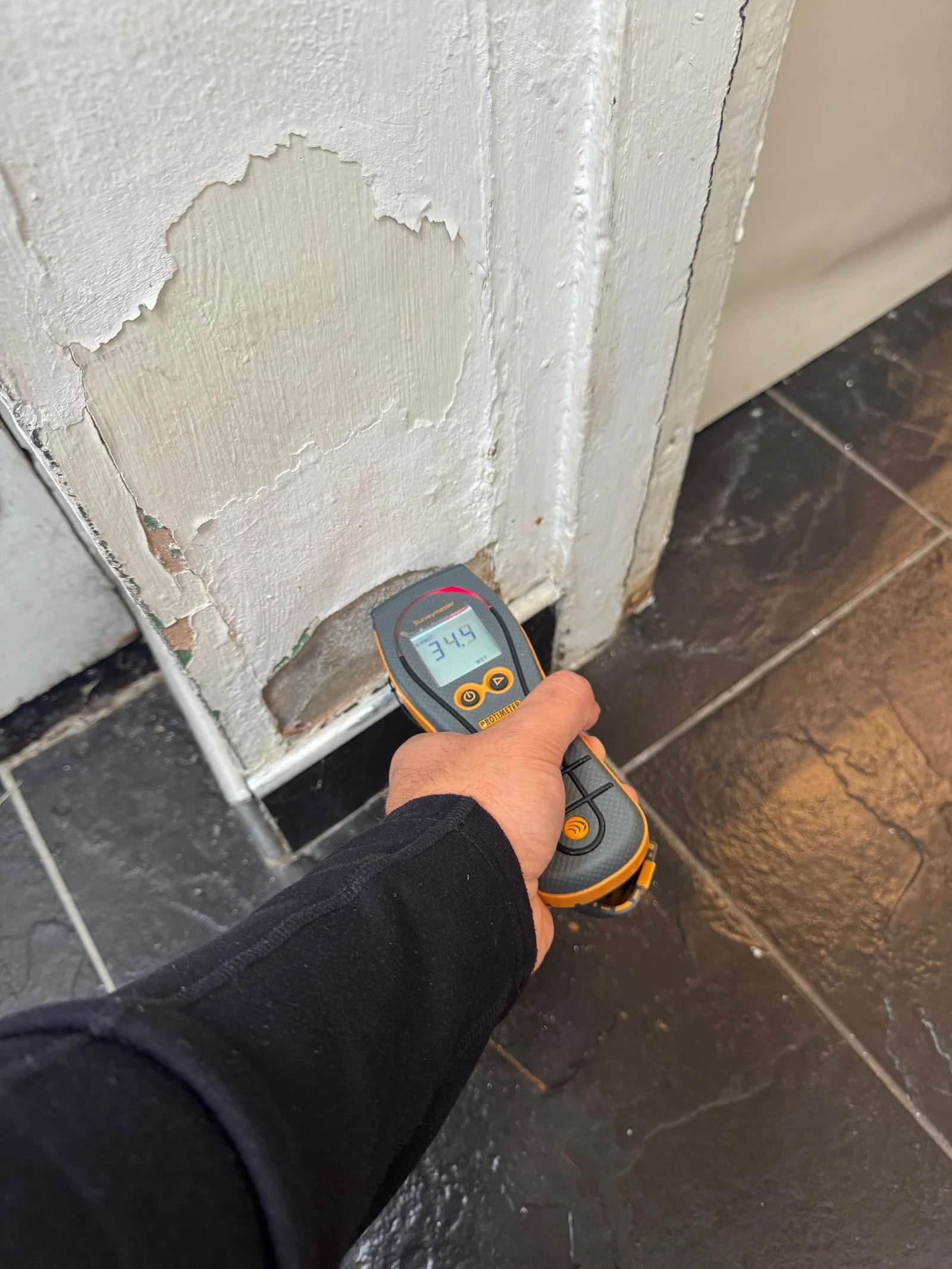
Keep the visible decoration damage and the instrument indication as separate observations. A useful field record adds the instrument, mode, material, location and conditions. Do not turn the displayed number into a percentage water content for masonry; see the linked moisture-investigation guide for measurement limits.
Survey archive photograph · View larger image
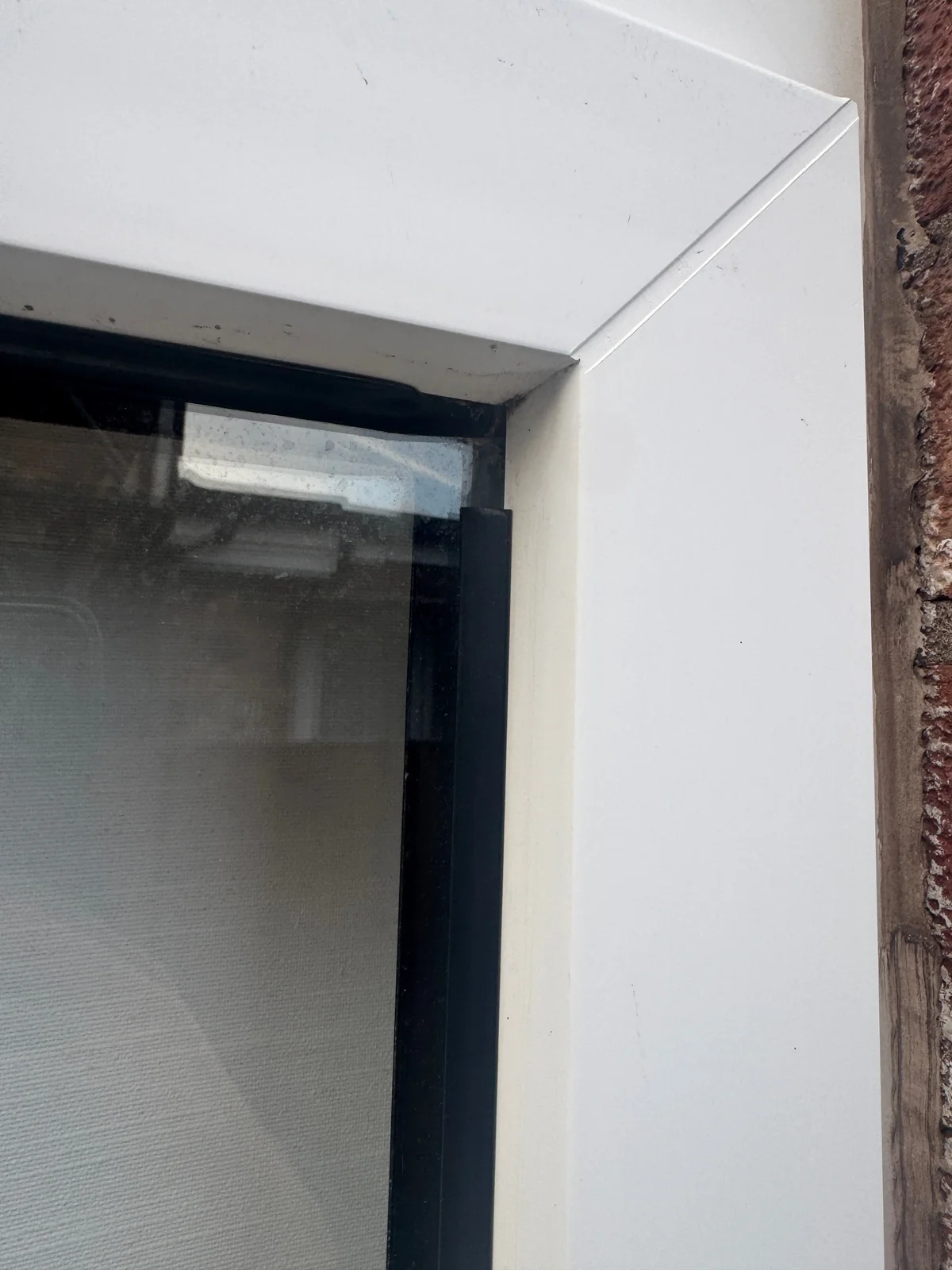
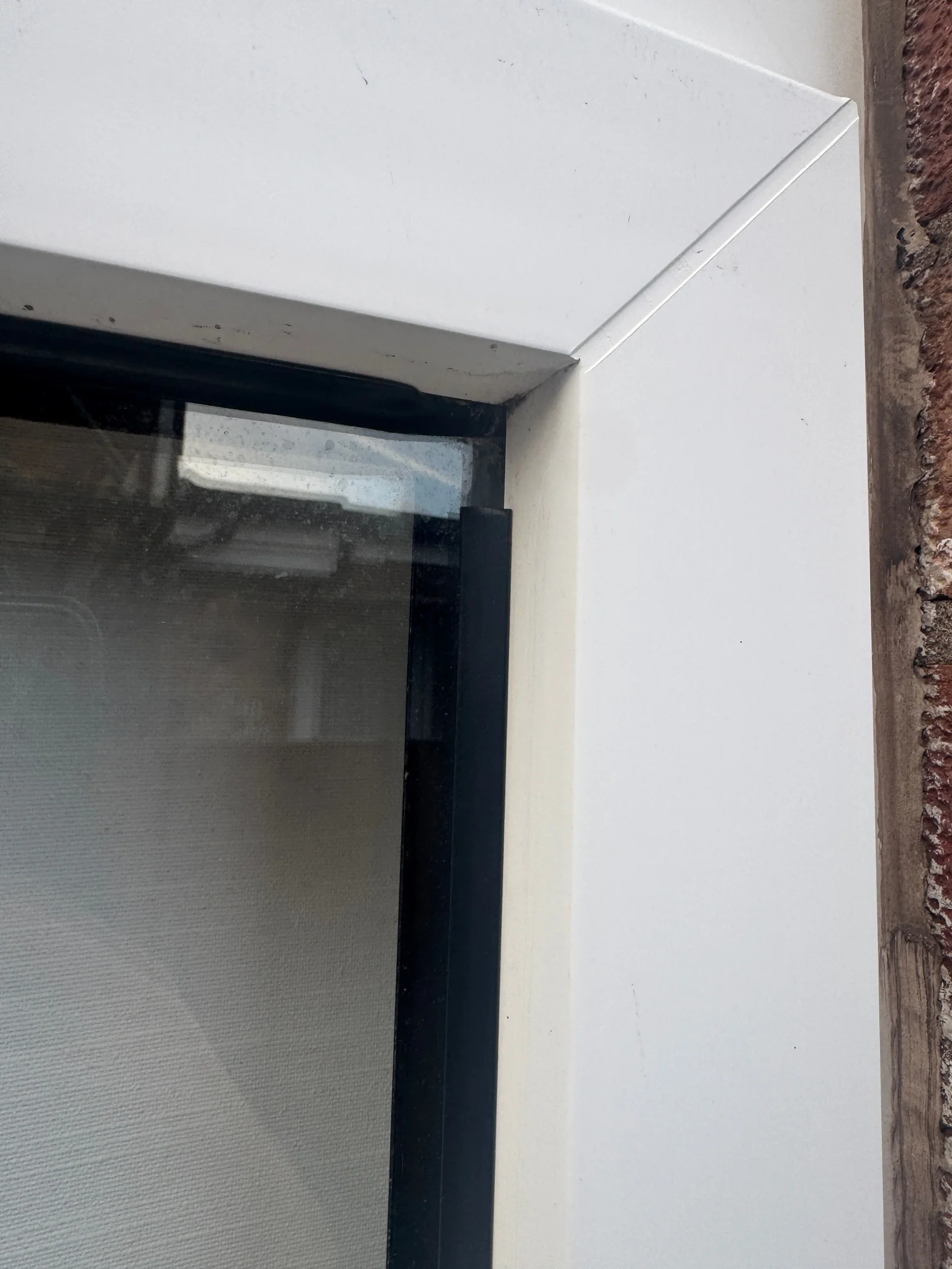
The black gasket has pulled back from the window corner, leaving a gap. This is a visible seal detail; it is distinct from misting within a double-glazed unit.
Survey archive photograph · View larger image
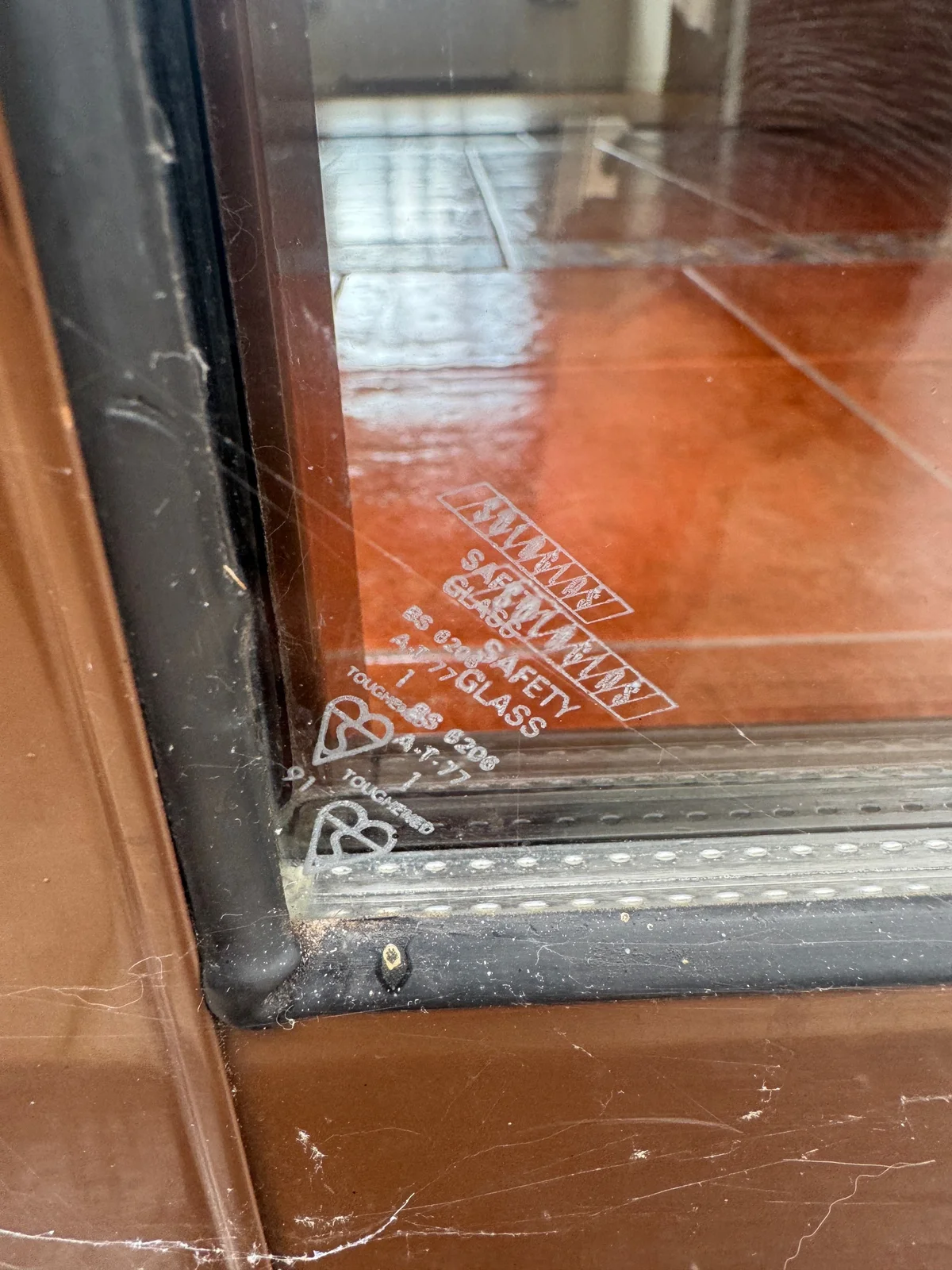
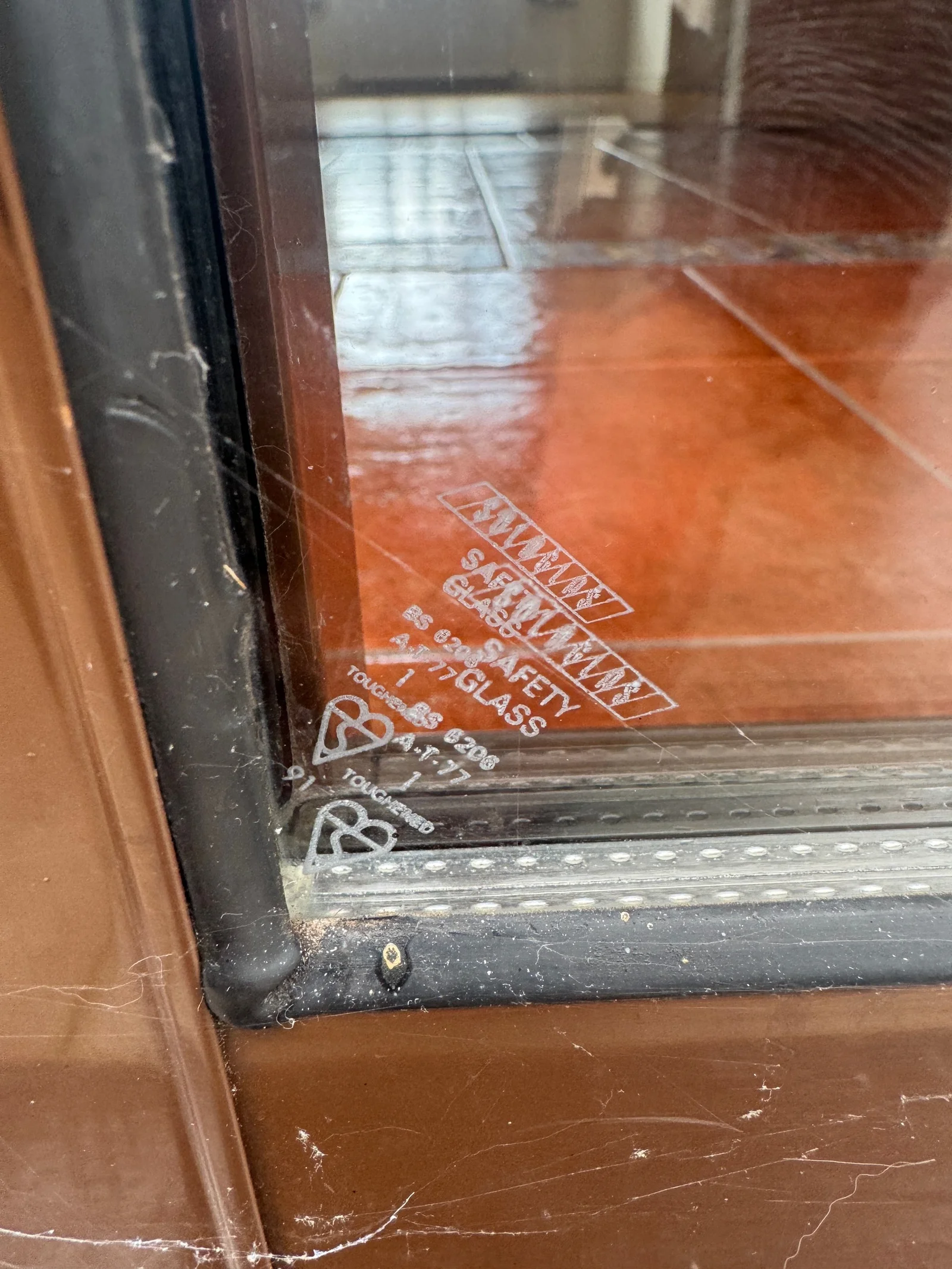
A marking is visible in the corner of the glass. Record the actual marking and pane location: this is useful identification evidence, not a defect or proof that the complete installation complies.
Survey archive photograph · View larger image
Read the evidence
These are separate properties and different kinds of evidence. The window corner records a seal gap; the glass marking records useful identification information. Good survey records include relevant details that are not themselves defects.
Before releasing the report
- Can every significant statement be traced to an observation, attributed account, source or clearly labelled inference?
- Do photos, plans, captions and readings use matching IDs?
- Is the requested next step specific enough for the client to commission?
- Does the final exported report preserve the meaning, limitations and order of advice?
- Is there a route back from the action to its outcome and the guide it may improve?
Source and scope
The moisture joint position statement supports contextual assessment, staged investigation, proportionate advice and clear reporting. It emphasises traditional construction while expressly presenting its framework for buildings of all types and ages. It does not make this workflow mandatory for every survey. See JPS 2022, explanatory notes and sections 4, 5 and 7 in the source register. The labels, IDs, tables and decision checks above are operational design.