Crack monitoring: tell-tales, BRE categories and why one visit is not a trend
A cheap acrylic plate and a lot of discipline. Here is how to monitor a crack so the record means something, and how to word a crack you have seen only once.
- Chapter
- 01 — What you carry
- Entry
- 01.05
- Updated
- 12 October 2026
- Reading time
- 7 min
- Sections
- 06
- Status
- Published · checked at date shown
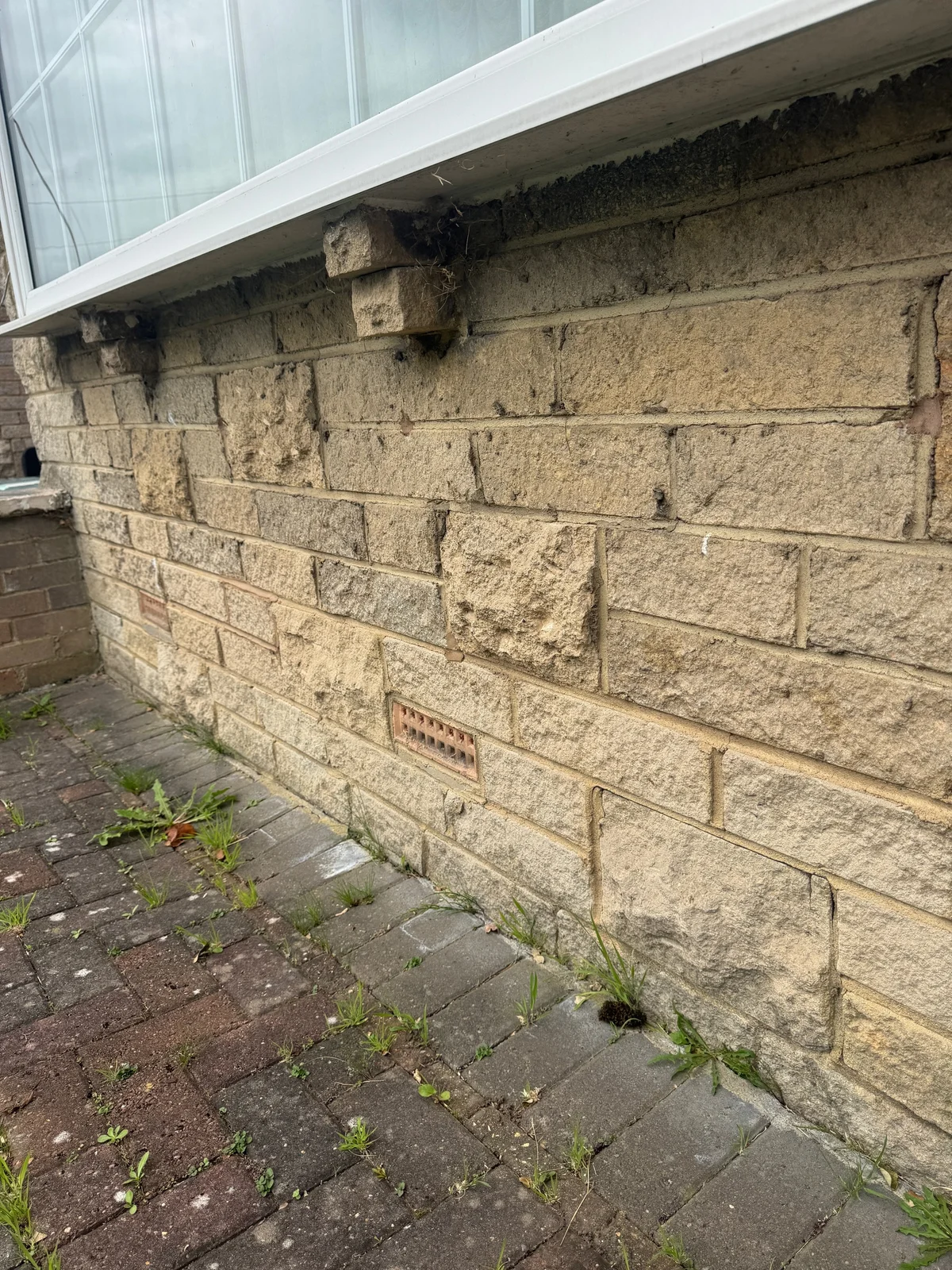 On site · 01
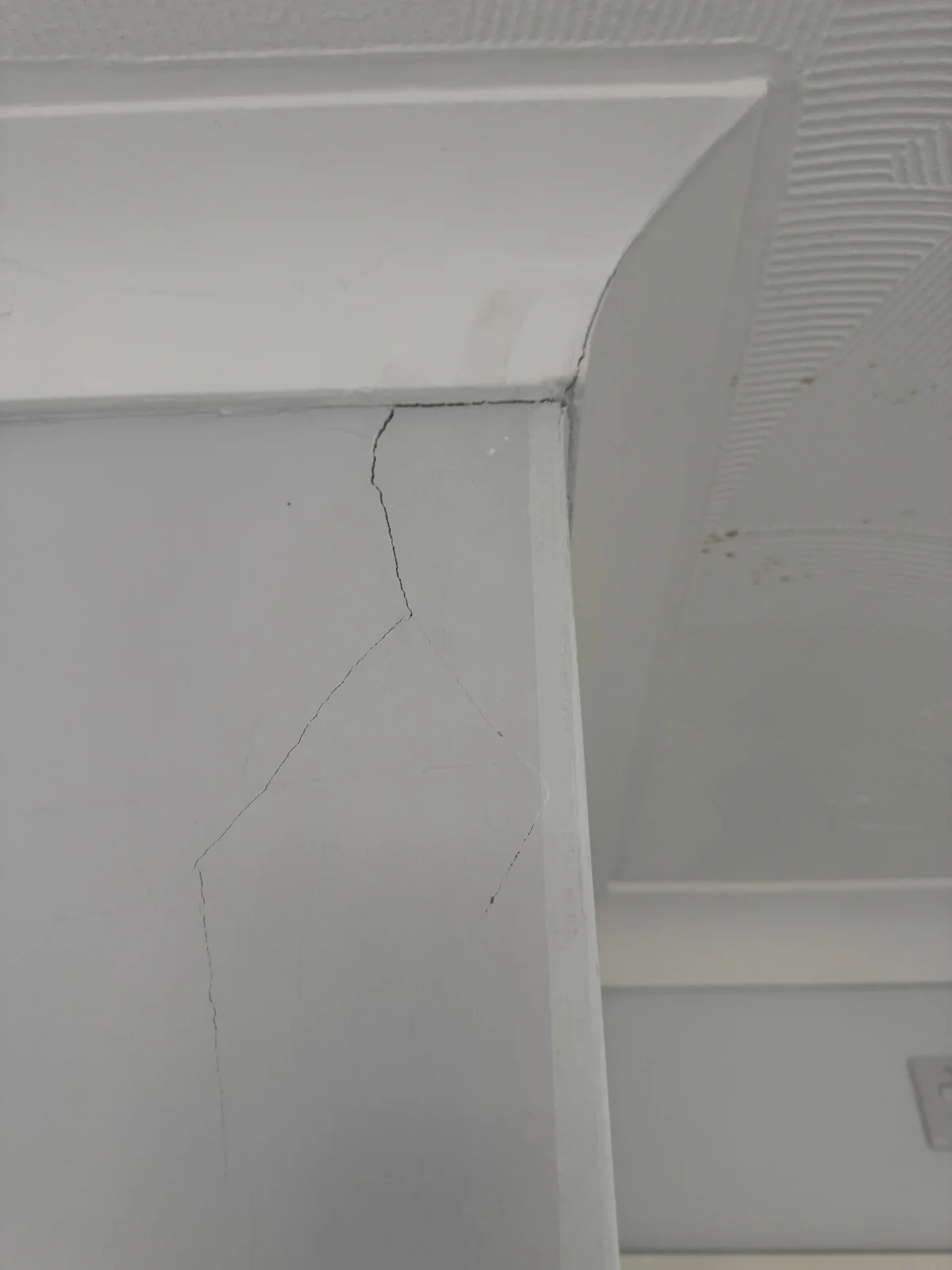 On site · 02
Cracks produce more argument than any other defect in residential work, for a simple reason: the buyer wants to know whether the crack will get worse, and one visit cannot tell them. A single inspection records width, pattern and position on one day. It cannot separate a crack that opened forty years ago and has not moved since from one opening a millimetre a season. Monitoring turns that snapshot into a record over time. The tell-tale is cheap; the discipline around it is what makes the record worth anything.
What it measures
A tell-tale is two overlapping plates fixed either side of a crack, one carrying a cursor and one a millimetre grid. If the crack opens, closes or shears, the plates move relative to each other and the cursor moves across the grid. Read in two axes at each visit, it gives the direction and size of relative movement at that one point since the datum reading. That is all it gives.
Three things distort it.
The fixing. Plates on adhesive pads alone creep in sunlight, lift with the paint and peel in damp; the movement you read is the pad, not the wall. Fix with screws and epoxy.
Temperature and moisture. Masonry expands and contracts with heat and wetting; a crack across a long elevation can open and close by a fraction of a millimetre in a day with no foundation movement at all. A reading without temperature and recent weather beside it cannot be interpreted later.
Resolution. A Standard tell-tale is read to 1 mm by eye; the Plus pattern reads to ±1 mm, ±0.5 mm by interpolation. A month of seasonal clay movement is often inside that band, which is why the length of the record matters more than the precision of any one reading.
Where it misleads
Width read as severity. BRE Digest 251 classifies damage in six categories: 0 is hairline under 0.1 mm; 1 is fine cracks up to 1 mm; 2 up to 5 mm; 3 is 5–15 mm, or several cracks over 3 mm; 4 is 15–25 mm and also depends on the number of cracks; 5 is over 25 mm. The Digest says width is one factor and must not be used on its own; ease of repair is the test.
One season read as a trend. Shrinkable-clay movement is seasonal: cracks open in late summer and autumn as the soil dries and close over winter and spring as it recovers. Three months from June shows opening; three months from November shows closing; either is misread as a trend. A monitoring period has to span at least one full seasonal cycle, and 12 months is the normal minimum an insurer’s engineer will expect before drawing a conclusion.
The record read as the diagnosis. Monitoring shows that two points moved apart, not why. Leaking drains, tree roots, inadequate foundations, thermal movement and a corroded lintel all produce moving cracks, and each has a different remedy.
The broken glass tell-tale. Obsolete. A broken one tells you it broke, not when, by how much or in which direction.
Width without level. Settlement, heave and tilt often show more clearly in floor levels and out-of-plumb walls than in crack widths (Digests 344 and 475). Monitoring the crack while the floor goes out of level is half a record.
Using it so the result holds
Fixing tell-tales means drilling into someone else’s wall. That is outside the standard scope of a Level 2 or Level 3 inspection under the RICS Home Survey Standard: Level 2 is visual and non-invasive, and monitoring is an agreed additional instruction with the owner’s written consent. The buyer cannot give that consent.
On the day of installation:
- Number every position on a sketch, with an establishing photograph of the wall.
- Fix with screws and epoxy, never pads alone, and set the cursor to zero before the datum reading.
- Take the datum reading in both axes and photograph every tell-tale with the date in shot.
- Record the crack itself: width at marked points with a comparator card or feeler gauges; pattern (stepped, diagonal, vertical, horizontal); which way it tapers; whether it shows inside and out.
- Record temperature and recent weather.
Then read monthly, fortnightly if movement appears active, for at least 12 months. Each reading gets the same photograph, date, temperature and weather note. Add a plumb-line check and a note on floor levels at the start and end of the period.
Most buyers do not have 12 months. On a one-visit survey the job is to record the crack precisely enough that a later observer can tell whether it has changed, and to say plainly what one visit cannot conclude.
What to buy
Avongard prices are ex VAT as listed in October 2026; prices move, so check the live price.
| Model | What it is | Indicative UK price (Oct 2026) | Verdict |
|---|---|---|---|
| Avongard Standard tell-tale | Two-plate acrylic, 1 mm grid, two axes | £10.95 ex VAT | Buy a box. The default for a flat wall. |
| Avongard Plus tell-tale | As Standard, reads ±1 mm, ±0.5 mm by interpolation | £13.95 ex VAT | Worth the extra £3 where small movement is expected. |
| Avongard Corner tell-tale | Reads a crack that turns an internal or external corner | £19.50 ex VAT | Only where the crack does turn a corner. |
| Avongard Displacement tell-tale | Reads in three axes, including out-of-plane | £24.50 ex VAT | For shear and separation, such as a bay pulling off the main wall. |
| Avongard crack monitoring kit | Boxed kit | £149 ex VAT | Sensible if starting from nothing. |
| Crack width gauge or comparator card | Printed card with graduated line widths | About £5–£10 inc VAT | Every surveyor; in every crack photograph. |
| Feeler gauges | Engineering blade set for a one-off width | Check live price | Cheap and more repeatable than a card for fine cracks. |
| Reference studs and digital caliper | Two fixed studs read to 0.1 mm | Check live price | Beats a tell-tale when the figures will be contested. |
| DEMEC demountable strain gauge | Mechanical gauge reading to 0.01 mm | Four figures | Engineer’s kit. |
| Glass tell-tale | A glass strip glued across a crack | Do not buy | Obsolete. Records breakage, not movement. |
| Wireless crack sensor (for example Senceive) | Remote telemetry node | Insurer and engineer kit | Not a surveyor’s purchase. |
For most residential work: a box of Avongard Plus tell-tales, epoxy, screws and plugs, and a comparator card. The Plus is worth the small premium because the movement you are looking for is small. Add a Displacement tell-tale at a junction, such as a bay or extension meeting the original house, because movement there is usually out of plane and a flat tell-tale misses it.
The extra money, reference studs and a digital caliper, buys resolution and credibility: a stud pair read to 0.1 mm beats a plastic grid read by eye when an insurer’s engineer is involved.
Not worth paying for: a DEMEC gauge, which reads to 0.01 mm, costs four figures and needs laboratory discipline to mean anything; and wireless sensors, which are insurers’ kit for claims across many properties.
Recording it in the report
Keep the instrument, the conditions, the pattern, the inference and the next step visibly separate. The wording that fails compresses all five into one sentence.
Weak: “Cracking noted to the rear elevation, indicative of subsidence. Recommend monitoring.”
Wording that holds: “A diagonal crack runs up and to the right from the head of the rear kitchen window, stepped through bed and perpend joints, for about 1.2 m. It is about 3 mm at its widest at the window head, tapering to hairline towards the eaves: category 2 of BRE Digest 251 on width alone. It shows internally as a hairline crack in the plaster at the same position. Inspected 12 October 2026 at about 14 °C after a dry week. One inspection cannot establish whether the crack is historic or progressive. The pattern and the time of year are consistent with seasonal foundation movement; other causes have not been excluded. We recommend assessment by a chartered structural engineer and monitoring over at least 12 months, which is outside the scope of this report, and that you ask whether an insurance claim has been made.”
The second version is longer. It is also the one that survives a solicitor’s letter two years later.
References
- BRE Digest 251, Assessment of damage in low-rise buildings, BRE, 1995 revision
- BRE Digest 343, Simple measuring and monitoring of movement in low-rise buildings. Part 1: cracks, BRE, 1989
- BRE Digest 344, Simple measuring and monitoring of movement in low-rise buildings. Part 2: settlement, heave and out-of-plumb, BRE, 1989
- BRE Digest 361, Why do buildings crack?, BRE, 1991
- BRE Digest 475, Tilt of low-rise buildings with particular reference to progressive foundation movement, BRE, 2003
- RICS, Home Survey Standard, RICS, 2019 (effective March 2021)
Where to buy
Suppliers
Manufacturer or primary UK stockist. Check the live price and the current specification before buying.
- 01Avongard – Standard tell-tale ↗Two-plate acrylic tell-tale with a 1 mm grid, the default position monitor. £10.95 ex VAT direct from Avongard, October 2026.
- 02Avongard – Plus tell-tale ↗Reads to ±1 mm, ±0.5 mm by interpolation. £13.95 ex VAT direct from Avongard, October 2026.
- 03Avongard – Crack monitoring kit ↗Boxed kit for a surveyor starting from nothing. £149 ex VAT direct from Avongard, October 2026.
- 04BRE Bookshop – BRE Digests 251, 343, 344, 361 and 475 ↗The classification and monitoring guidance the report should cite. Priced individually; check the live price.